Laura Gamba
22 May 2026•Update: 22 May 2026
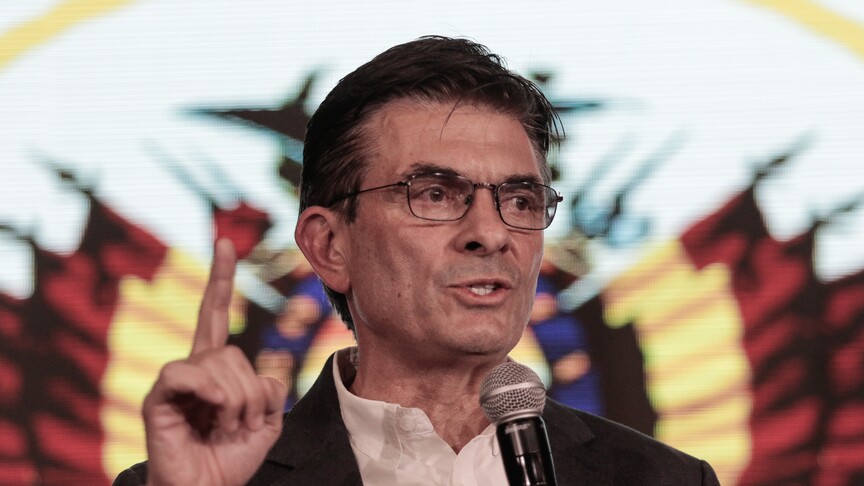
Bolivian President Rodrigo Paz reshuffled his Cabinet on Thursday amid escalating anti-government protests and growing calls for his resignation across the country.
Constitutional lawyer Williams Bascope was sworn in as the new labor minister at the presidential palace in La Paz, replacing Edgar Morales.
The Cabinet change came as the powerful Central Obrera Boliviana (COB) labor federation and indigenous peasant unions intensified blockades around the administrative capital, disrupting major transit routes.
Shortly after taking office, Bascope said his immediate priority would be “to pacify the country” and establish lasting channels of communication with striking labor groups.
President Paz thanked the outgoing minister for his efforts to maintain dialogue and said the new minister shared the government’s democratic principles.
“We now embark on a new stage, with renewed energy, always thinking about the homeland,” Paz said.
Paz, who took office six months ago, adopted a conciliatory tone during a press briefing after the swearing-in ceremony.
“We have failed to approach certain sectors,” he admitted.
“Over the last three weeks, I have been meeting with representatives of the protesters, and their primary demand is simply that they want to be part of the solutions,” he added.
To address the unrest, Paz announced plans to establish an Economic and Social Council aimed at creating a platform where regional and civic organizations can directly discuss policy reforms.
“Social organizations will always have a space for dialogue with this government,” he said, describing the cabinet reshuffle as an effort to make the administration “more agile, closer, and equipped with a genuine capacity to listen.”
As tensions deepened, the government also informed the Organization of American States (OAS) that La Paz was facing coordinated actions aimed at causing “institutional destabilization.”
Hours before the ministerial swearing-in, the Paz administration formally notified the OAS that La Paz was under siege by mobilized factions seeking to trigger “institutional destabilization.”
The move drew swift support from Washington.
“We will not allow criminals and drug traffickers to overthrow democratically elected leaders in our hemisphere,” US Secretary of State Marco Rubio said.