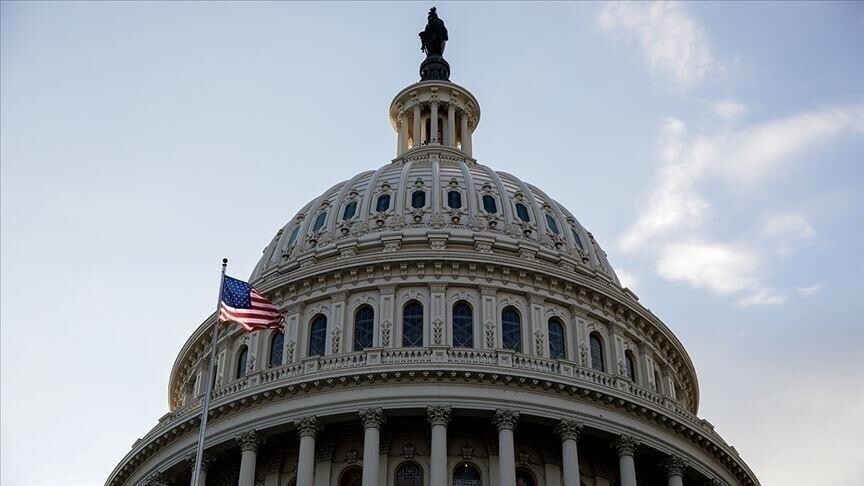
The Democratic Party's sweeping victory in the US midterm elections has fueled expectations that the new Congress will scrutinize spending on the war with Iran and the Trump administration's tariffs, while divided government could lead to clashes over budget deficits, tax reforms and public spending.
After Democrats secured majorities in both the House of Representatives and the Senate in Tuesday's elections, the future of fiscal and trade policies in the world's largest economy moved to the forefront of investors' concerns.
The impact of the shifting political balance in Congress on financial markets will depend on how political gridlock complicates large-scale economic reforms and how these disputes influence inflation, corporate earnings and interest rate expectations, according to German asset management firm DWS.
Political gridlock, fiscal uncertainty in focus
Ahead of the midterms, DWS published a report titled "U.S. midterms: Ten questions investors should be asking" on Oct. 26, noting that correctly predicting political outcomes does not necessarily guarantee accurate financial market forecasts.
The report pointed to the market reversal following the 2016 presidential election as an example of how financial markets can respond unexpectedly to political developments.
DWS expects much of existing federal spending to continue, while mounting interest payments on public debt and commitments maintained during annual budget negotiations could complicate efforts to address long-term debt challenges.
Political polarization in Congress also raises the risk of disputes over federal funding and potential government shutdowns.
Future budget deficits, public borrowing and financing costs are therefore expected to remain key considerations for investors evaluating US Treasury bonds.
The report noted that US stock markets have generally tended to weaken ahead of elections before recovering afterward, urging investors to monitor changes in tariffs, fiscal policies and corporate regulations, particularly their implications for economic policy and future earnings expectations.
Artificial intelligence, data centers face policy risks
DWS also identified artificial intelligence (AI) and data center investments as key areas where the midterm elections could have economic implications.
While political developments may have a limited effect on broad market indexes, they can influence costs and profitability in specific sectors, particularly those exposed to changes in tariffs and regulatory oversight.
The rapidly expanding AI and data center infrastructure industry is among the sectors vulnerable to such policy shifts.
Investment decisions in AI infrastructure are influenced not only by federal policies but also by state and local governments, which control zoning, infrastructure connections and permitting procedures.
If local authorities tighten these requirements or demand greater corporate contributions to infrastructure costs, technology companies could face pressure on profitability.
Nevertheless, DWS expects broader productivity gains driven by AI to support higher long-term stock valuations despite the regulatory challenges facing the sector.
The report also emphasized that economic growth, inflation, public debt and interest rates should be considered when assessing the effects of elections on bond markets.
Historically, post-election movements in credit markets have been more closely associated with economic cycles and broader financial conditions than with election outcomes themselves.
Political uncertainty could influence the risk premiums investors demand on long-term bonds, although such effects may emerge gradually rather than immediately after an election, DWS said.
Democrats to scrutinize tariffs, Iran war costs
Arzu Al, an economics professor at Istanbul's Marmara University, told Anadolu that Democratic majorities in Congress would change the decision-making process for the remainder of President Donald Trump's second term, subjecting budget negotiations, tax reforms and public spending to closer scrutiny.
"The Democrats will bring the impact of tariffs on consumer prices, energy profits, and the cost of the Iran war to the forefront," she said. "We need to look at the energy market to understand the voter reaction."
Al noted that Europe turned increasingly to American natural gas following the outbreak of the Russia-Ukraine war.
However, the US and Israeli attacks on Iran and disruptions in the Strait of Hormuz subsequently drove energy prices higher.
While American energy companies benefited from increased export revenues, consumers faced higher gasoline and diesel prices, along with rising transportation costs.
"The gains of energy firms did not translate into cheaper fuel for consumers," she added.
Al said Trump's foreign policy decisions had directly affected the livelihoods of American households.
"The new Democratic Congress will scrutinize war spending and also work towards narrowing the president's policy space to maneuver on trade and tax policies," she said.
She noted that the incoming Congress could also introduce restrictions targeting China, an issue that has drawn bipartisan support.
However, she said the main focus in 2027 would be the economic consequences of political gridlock in Washington.
Energy prices, interest rates to shape outlook
Al said congressional restrictions on new spending and tax reforms could affect economic growth forecasts, the US dollar and bond yields, while budget disagreements could heighten risks surrounding the financing of public debt.
"Persistent disruptions in the Strait of Hormuz will keep oil and transport costs high, thus fueling inflation -- this could delay the Fed's rate cuts -- but a recovery in the energy supply could ease inflationary pressures and relieve the bank," she said.
She added that the impact on international investments would vary by sector.
Liquefied natural gas (LNG) exporters are expected to benefit from European demand, while energy-intensive industries could suffer from persistently high costs.
"Technological competition with China will also influence semiconductor and critical mineral investments, while Europe's US dependency in energy will render trade relations more important," she said.