Yasin Gungor
30 April 2026•Update: 30 April 2026
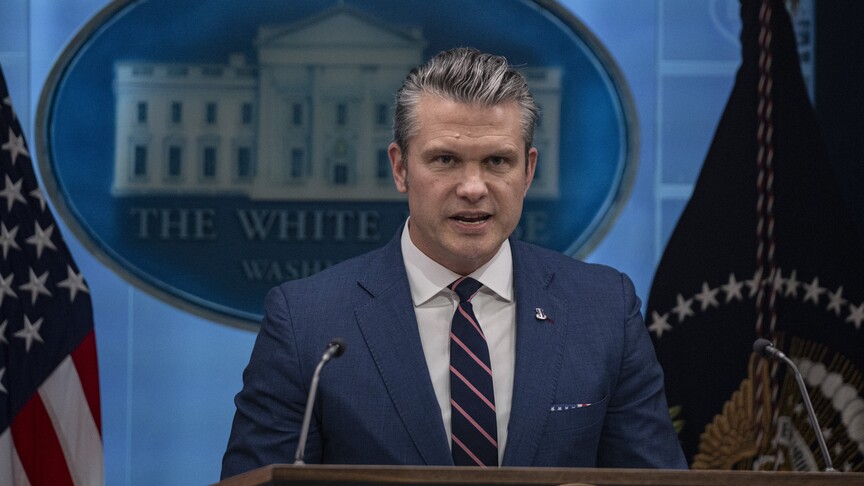
US Defense Secretary Pete Hegseth told a Senate committee Thursday that a 60-day statutory clock for the war with Iran was paused because of a ceasefire.
“We are in a ceasefire right now, which our understanding, means the 60-day clock pauses or stops,” said Hegseth, though he deferred final legal interpretation to the White House.
His remarks came as Washington faces a looming May 1 deadline under the 1973 War Powers Resolution, which requires congressional authorization for sustained military engagement.
Some have questioned whether the ceasefire effectively pauses the 60-day countdown, arguing that troops are no longer engaged in active combat.
But the State Department rejected that interpretation. An agency legal adviser had argued that the temporary truce does not legally terminate the conflict.
The adviser noted that because neither Washington nor Tehran has agreed to a permanent end to hostilities, the pause lacks the "stability" and “permanence” required under international law, hence to stop the legislative clock.
A White House official told Anadolu that the administration remains in discussions with lawmakers on the issue. The official warned against political maneuvering, noting that attempting to usurp the authority of the commander-in-chief would only undermine the US military abroad, “which no elected official should want to do.”
- Munition stockpiles, Ukraine
Hegseth said many US capabilities were depleted by shipments to Ukraine under the Biden administration, leaving commanders with significant gaps. He noted that US President Donald Trump has ordered the arsenal to be rebuilt at two to four times the previous expenditure levels.
“On the munitions front, we're in really good shape,” said Hegseth, affirming that the goal is to go beyond the deficiency caused by those sent to Ukraine or spent in the Iran war.
He praised a shift in policy where US funding for Ukraine dropped while European nations increased theirs, calling it "exactly what we want," and that it reflects the administration's demand for burden-sharing by "rich and capable countries in Europe."
AI, civilian protection
Addressing concerns about the use of artificial intelligence in strikes, the secretary dismissed suggestions that the technology might operate without oversight.
"There is a human in the loop on decisions that are made," he said, citing an agency directive that mandates human judgment on the use of force.
Hegseth said that unlike "adversaries" who use human "shields," the US military never targets civilians. He asserted that the military maintains strict constructs to prevent collateral damage to the maximum extent possible.
The US is accused of a deadly missile strike on an elementary school in Iran. Preliminary findings suggest that the strike resulted from the use of outdated intelligence and erroneous targeting data while attempting to hit an adjacent Islamic Revolutionary Guard Corps (IRGC) compound.