Trade, Taiwan, Iran: Trump’s priorities for summit with Xi
Any agreement Trump strikes in China will have to overcome years of economic acrimony, say analysts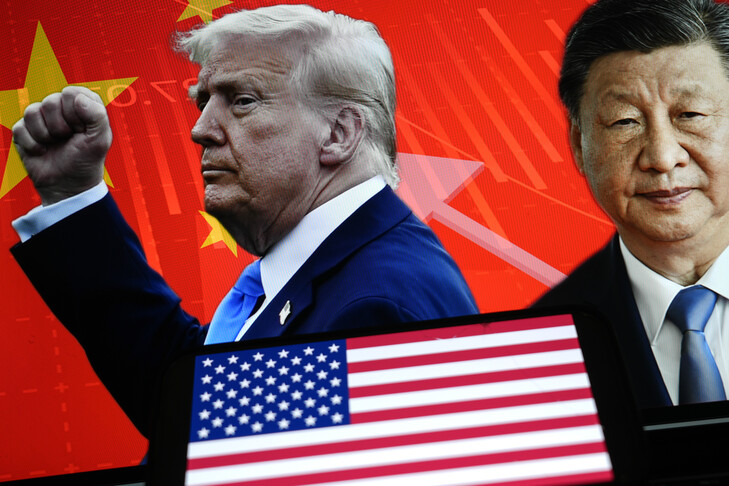
- Tariffs, export controls likely to be 'focal point,' former US diplomat Susan Thornton tells Anadolu, predicting temporary extension of 'trade truce'
- US blockade on Iran will also be on agenda, with China 'interested in freeing up traffic' and 'unlikely to go for a US-controlled exemption,' says Thornton
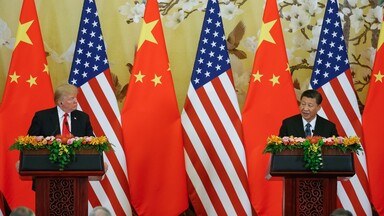
US President Donald Trump is set to sit down with Chinese President Xi Jinping for a high-stakes summit in which the leaders of the world’s top two economies will seek to tamp down major strains in the US-Sino relationship that have sent shockwaves across the globe.
The visit will be the first by a US president since 2017, when Trump traveled to China to meet with Xi. Geopolitical tensions have only risen, with trade, US policy on Taiwan, the development of artificial intelligence and most recently the US-Israeli war against Iran, fraying relations.
While ties have stabilized somewhat in the last year, mistrust between Washington and Beijing runs deep and will dominate the talks’ environment. But the summit -- already delayed two months by Trump’s war against Iran -- marks a pivotal opportunity for the leaders to navigate tumultuous tides in the hopes of reaching consensus, however marginal, on at least some areas of disruption.
Ahead of the visit, China signposted it will seek to prioritize US policy on Taiwan during the talks, describing the island as being central to “China's core interests, and the foundation of the political foundation of China-US relations.”
“Abiding by the one-China principle and the three China-US joint communiques, and honoring the commitments made by successive US administrations on the Taiwan question, are international obligations the US side must fulfill," said Foreign Ministry spokesperson Lin Jian.
Washington remains Taipei's top arms supplier. The Trump administration approved a record $11 billion in arms sales last year, prompting protests from Beijing, which also sanctioned several US arms firms and their personnel in retaliation.
Trump has long sought to highlight the US arms market as preeminent and has touted sales to nations as economic boons for the country.
Susan Thornton, a senior State Department official who, prior to retiring, served as the top official for East Asia during the first Trump administration, threw cold water on the prospects of any overhaul to US policy.
“I do not anticipate changes to the US' longstanding policy on the Taiwan issue,” she told Anadolu in an interview.
The US president now heads to Beijing with a singular goal that has proven remarkably consistent throughout his presidencies: striking a deal. Any agreement, however, will have to overcome more than a year of economic acrimony as Washington and Beijing have traded successive rounds of tariffs that have been eased, but not eliminated.
To be sure, officials from Washington and Beijing have spent months hammering out details for the leaders to sign some sort of agreement to further reduce the economic fallout from the imposition of import duties.
Thornton acknowledged that tariffs will likely be a “focal point” of the two-day summit “as well as export controls from both sides.” She predicted that the visit would extend the "trade truce" temporarily.
'Board of Trade'
Multiple media reports have suggested that the US and China are looking to forge what is being described by Trump administration officials as a “Board of Trade,” which will be tasked with identifying goods that the economic powerhouses should trade regardless of tensions in the bilateral relationship.
Whether or not they are able to cement the details ahead of the intensely-watched sit-down between Xi and Trump remains to be seen.
“There are too many devils in the details to make a quick conclusion possible, in my judgment,” said Thornton, who serves as a senior fellow at Yale Law School.
China’s long-standing commercial ties with Iran, including crucially its purchases of Iranian oil, have long vexed Washington. Since Trump began his “maximum pressure” campaign during his first term, a policy largely continued by former President Joe Biden, the US has sought to curtail nearly all commercial activity with Tehran through encompassing waves of sanctions.
Beijing has been undeterred, remaining by far the largest purchaser of Iranian crude, accounting for 90% of Iran’s total oil sales, according to data from the Windward maritime intelligence group.
China has shown itself to be increasingly willing to openly defy US sanctions.
Earlier this month, Beijing instructed companies to ignore US sanctions on five Chinese refineries sanctioned by the Trump administration for their alleged role in facilitating the Iranian oil trade. China issued what is known as a “blocking order,” an exceedingly rare step used to counteract foreign laws.
China’s Commerce Ministry said it was taking the action to safeguard national sovereignty, security and development interests while protecting the legitimate rights of Chinese entities and citizens.
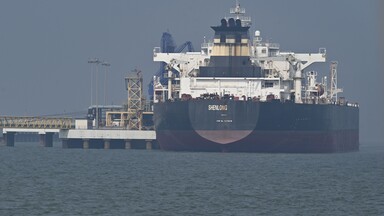
In addition to economic penalties, Trump has sought to restrict the sale of Iranian oil by imposing a blockade on all ships transiting to or from Iranian ports via the Strait of Hormuz.
Thornton said that while she does not expect an end to China’s purchases of Iranian crude, the summit is likely to include discussion of “what China can do to contribute to opening Hormuz.”
Asked if Trump would provide China with a blockade exemption, Thornton said China’s concerns are far more encompassing.
“China is interested in freeing up traffic in the Strait of Hormuz and is unlikely to go for a US-controlled exemption,” she said.