Muhammed Yasin Güngör
18 August 2026•Update: 18 August 2026
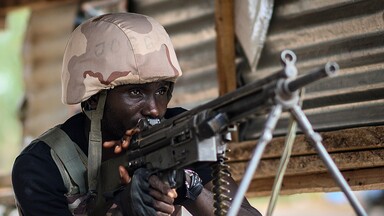
The UN told the Security Council on Tuesday that the security landscape along Libya’s western coast remains highly unstable due to intense competition among armed groups involved in human trafficking and fuel smuggling.
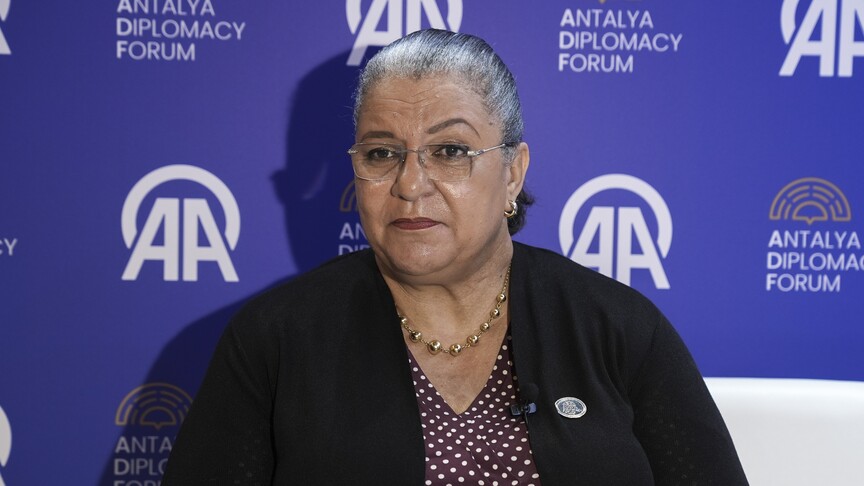
“The security environment along Libya’s western coast remains precarious amid competition among armed actors engaged in trafficking illicit drugs, human trafficking, and fuel smuggling,” said Hanna Serwaa Tetteh, special representative and head of the UN Support Mission in Libya (UNSMIL).
Tetteh identified the emergence of drone warfare against vital infrastructure as a “worrying development.” Recent strikes targeted the Zawia oil refinery and a power substation, the latter causing a major outage that removed more than 700 megawatts of generation capacity. The envoy demanded a thorough investigation into the attacks on civilian assets, asserting that perpetrators must be held accountable.
Security concerns also extended to the east, where Maj. Gen. Faozi Mansuri, a senior intelligence official for the Libyan National Army (LNA), was assassinated in a car bombing in Benghazi on Aug. 10, she noted.
Tetteh said the political process remains stalled, though she highlighted the work of the "Four Plus Four" Committee. The body is expected to meet Thursday to finalize the legal and constitutional framework for national elections.
Tetteh also highlighted an economic paradox. While the country spends $1 billion monthly on fuel imports, the electricity grid remains crippled by shortages. She cited evidence of "large-scale diversion of subsidized fuel" into the security sector, calling the practice an "unacceptable abuse of public resources."
- Climate, institutional collapse
Nissa Bek, a climate and security expert, told the Council that extreme environmental shocks are deepening the political crisis. As temperatures approached 50C (122F), Libyans faced power cuts of up to 15 hours per day, she said. Bek noted that a recent study in Tripoli found most domestic wells fail to meet drinking water standards due to contamination.
"For most people, the state is not experienced through a constitution or a political agreement," Bek noted. "It is experienced through whether the light comes on, whether water comes from the tap, whether the hospital works, whether someone responds when disaster comes."
She argued that when citizens sit in the dark or wonder if water will flow from their taps, they lose not just services but "confidence in the state itself." She urged the Council to integrate climate risks into conflict prevention strategies.
Libya remains divided between the Tripoli-based Government of National Unity led by Abdul Hamid Dbeibah, and a rival administration in Benghazi headed by Osama Hammad.