Muhammed Yasin Güngör
22 July 2026•Update: 22 July 2026
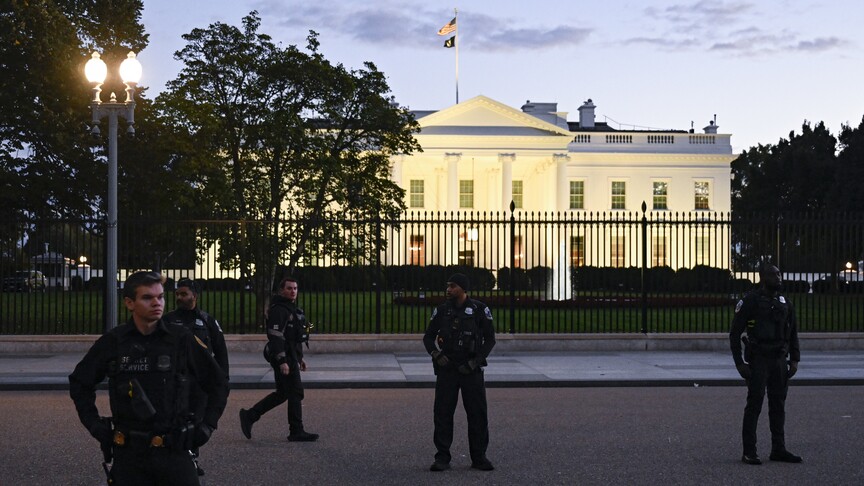
The leadership of the US Secret Service described the current security landscape Wednesday as a "highly volatile" environment, citing an unprecedented surge in threats against national protectees.
“The numbers at this agency, and certainly I have never seen in my 24-year career -- They're off the charts,” Secret Service Director Sean Curran said at a media briefing. He emphasized that the heightened risk level affects both high-ranking federal protectees and local officials across the country.
Deputy Director Matthew Quinn highlighted that it is "no secret" that Iran has publicly expressed intentions to target US President Donald Trump. He acknowledged that during a previous period, a "former president wasn't getting the resources that they potentially should have been getting," asserting that the agency has now corrected resource allocation issues.
The agency identified Unmanned Aircraft Systems (UAS) as an urgent and top-priority threat. Quinn noted that based on intelligence and observations of conflicts like the Russia-Ukraine war, it is a "matter of time" before drone tactics are utilized in the US.
Curran revealed that the agency is moving advanced detection and mitigation assets alongside the US president. He noted that some of the technology is being used on American soil for the first time. While acknowledging that the threat continues to evolve with fiber-optic and "dark drones," Quinn maintained that protected sites like the White House remain "very safe" due to cutting-edge defense industry solutions.
Secret Service officials explained that they have shifted their methodology to treat every protectee visit as an independent event. Curran said that even if the US president visits a site 100 times, a new advance team is sent 100 times because "the environment changes" and the "actual footprint will change."
Lina Alathari, chief of the National Threat Assessment Center (NTAC), explained that research in the last 25 years shows that there is "no one specific profile" for potential attackers. She said that the most frequent motive is a "grievance" directed at an individual, idea or ideology. Alathari noted that the agency increasingly relies on information from concerned citizens who report suspicious behavior seen in social media posts or online comments.
Curran emphasized that all partners now operate within unified command posts to ensure that "what one person hears, everybody hears."