Yasin Gungor
27 June 2026•Update: 27 June 2026
The UN Security Council on Friday became a forum for intense mutual recriminations as representatives from the US, Sudan and the United Arab Emirates traded blame for the deepening humanitarian catastrophe in Sudan.
"Today the United States is announcing that we are imposing a second round of sanctions on Sudan for its use of chemical weapons in violation of international law," said US Senior Adviser Massad Boulos. He claimed Washington is witnessing "the commission of atrocities," specifically accusing the Sudanese Armed Forces (SAF) of using illegal weaponry while the Rapid Support Forces (RSF) engage in genocide.
Sudan's representative denied the chemical weapons allegations, arguing the matter should be handled by the Organisation for the Prohibition of Chemical Weapons (OPCW). Al-Harith Idriss al-Harith Mohamed noted that a US team had previously taken soil samples from four regions and claimed that "until now no proof has been submitted by the American establishment" to support the charge.
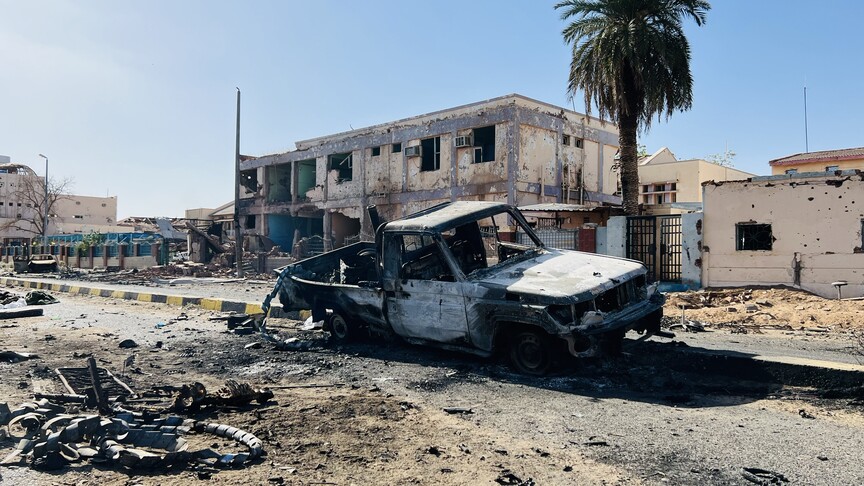
Sudan has been engulfed in conflict since April 2023, when fighting erupted between the army and the RSF. The war has triggered one of the world's worst humanitarian crises, killing tens of thousands and displacing millions.
Arms transfers cause 'death spiral'
Boulos warned that military support from more than a dozen countries is creating a "death spiral" and a "runaway race to the bottom" for the Sudanese people, calling for the immediate expansion of the existing arms embargo on Darfur to cover all of Sudan.
Sudan rejected the proposal, saying an expanded embargo would mean “the army will not be allowed to acquire weapons to defend its territories.”
Khartoum targets UAE over military support
Sudan also issued a series of accusations against the UAE, alleging that Abu Dhabi provides a continuous flow of "strategic suicide drones, heavy and medium artillery" and air defense systems to RSF rebels. The Sudanese envoy claimed complex logistical routes were uncovered involving "Colombian mercenaries" who were received at private airports in the UAE and given military training before being deployed.
"The ongoing looting of precious resources, such as gold, and the export of gold by the militia to the UAE continues," the Sudanese representative said, alleging that gold smuggling reached 56 tons last year, valued at more than $7 billion.
Khartoum accused the UAE of orchestrating "psychological warfare campaigns" to destabilize the government.
UAE Ambassador Mohamed Issa Abushahab wholly rejected the claims as "baseless allegations," asserting that Sudan was merely attempting to shift blame for the war. "It is therefore regrettable that a delegate ... continues to misuse the Security Council's platform to advance false allegations aimed at deflecting attention," he said.
Political responsibility and path to peace
The UAE countered by accusing both the Sudanese government and the RSF of intentionally prolonging the violence. "The political and humanitarian responsibility for this conflict ... lies with the warring parties who have chosen war and the pursuit of a military solution at the expense of the Sudanese people," Abushahab said, urging the Security Council to use all available tools to "compel the warring parties to accept" a truce.
Washington also accused the Sudanese Sovereign Council of repeatedly rejecting peace initiatives, including a text presented on Friday. Sudan's representative pushed back, claiming the US had ignored a counter-offer that included a “schedule for the withdrawal and for establishing peace.”