Michael Sercan Daventry
17 February 2016•Update: 09 May 2016
LONDON
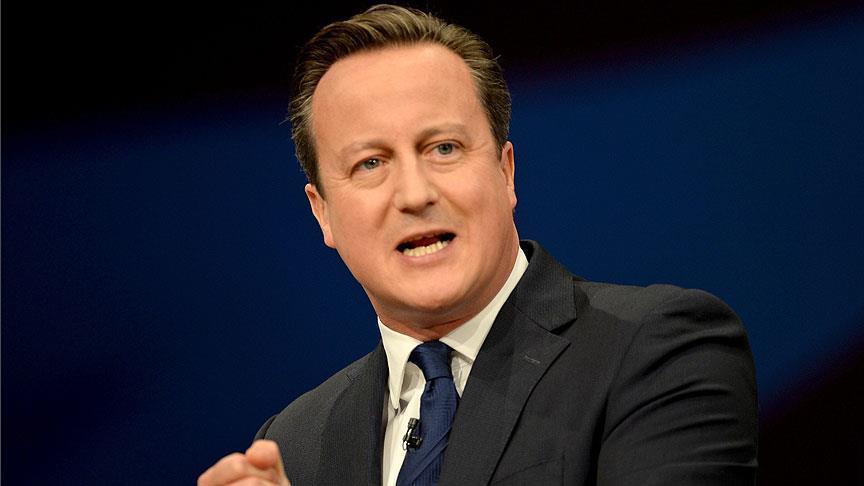
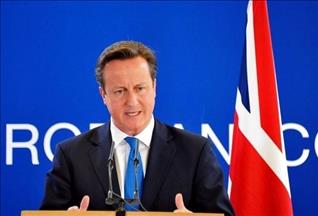
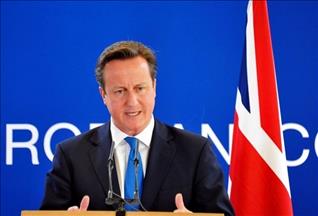
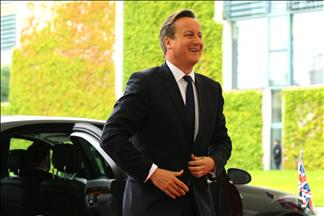
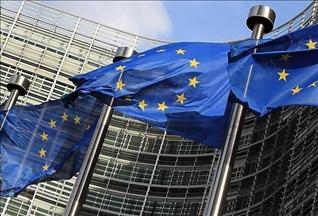
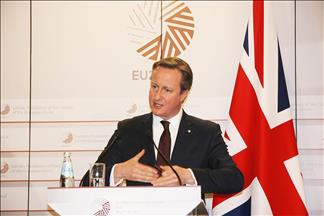
On Friday, it was Warsaw and Copenhagen. On Monday, it was Paris. U.K. Prime Minister David Cameron’s whirlwind tour of European capitals continued on Tuesday with a trip to Brussels as he aimed to finalize his renegotiation of Britain’s European Union membership terms.
The flurry of visits marked a crescendo in a nine-month effort to repair the faults he sees in the EU, before he attempts to persuade the voters of his own country that he has kept his promise to reform the 28-nation bloc.
His mission has been a delicate balancing act: the deal he secures must not only contain concrete changes that he can sell to the British people, but be palatable to the other 27 countries.
Cameron’s renegotiation has revolved around four policy areas: migration, the eurozone, European competitiveness and parliamentary sovereignty. The first of these has proved to be the most contentious.
He said there was a “very high level of migration from within the EU into the U.K.” and that he wanted to reduce what he estimates to be the draw of Britain’s welfare system, which pays at a higher rate than equivalents in Eastern Europe. That would involve changing rules allowing all EU citizens the freedom of movement and the ability to work throughout the union without restriction.
Regarding the eurozone, Cameron said there was a “potential unfairness” between member states that use the European single currency and those, like Britain, which have retained their national money.
He said earlier this month: “Let me be absolutely clear: we want the euro to succeed. The eurozone countries are our biggest market […] the issue here is just making sure there's fairness, making sure that Europe recognizes you have more than one currency in the European Union.”
He also argued that national parliaments should be able to group together to reject European laws and that the EU should work harder to reduce bureaucracy in the bloc’s institutions.
Some of Cameron’s reform demands proved fairly uncontroversial. A draft deal negotiated with European Council President Donald Tusk and released earlier this month included pledges to reduce red tape and create a friendlier environment for businesses.
It also proposed a “red card” system that would allow countries to block new EU rules if lawmakers in 55 percent of member states agreed.
But other demands proved more contentious. On migration, Cameron and Tusk announced they had agreed an “emergency brake” system that allows EU member states to prevent citizens from traveling to other states in order to claim higher welfare rates.
Cameron said that as far as the European Commission was concerned, “Britain qualifies for this emergency brake right now”.
But Eastern European countries, many of whose citizens live and work in Britain, want to ensure their nationals are not deprived of the rights they currently enjoy – such as child benefit, a monthly payment to all workers with children.
One such warning came from the Czech Republic, whose Europe Minister Tomas Prouza said during a BBC radio interview on Tuesday that changes to rules must not apply retrospectively.
And on the separate issue of the euro, Cameron spent Monday night in talks with President Francois Hollande to discuss French concerns that his proposed currency rules would effectively hand Britain a veto on eurozone matters.
The U.K. prime minister’s office said after the meeting that the two leaders had made “good progress”, but a French presidency source told France 24 that “there is still work to be done, especially on economic governance”.
The final text of the renegotiation – which could still differ significantly from the Cameron-Tusk draft agreement – is due to be approved by a summit of EU leaders on Thursday.
But the same summit is due to discuss an array of other issues – including the Syrian migrant crisis – and Cameron will attempt to upend this to create “a moment of high drama”, according to Richard Whitman, a senior fellow at Chatham House.
Whitman wrote on the global affairs think tank’s website that this will be “to give the impression he has pushed as hard as he can and fought to the last. Ideally, Cameron would see the summit timetable disrupted, with the agreement struck after unscheduled all-night negotiations”.
If a deal is struck, whether late on Thursday night or early Friday morning, Cameron is expected to head back to London to meet his cabinet that afternoon. He would then formally announce a referendum date – Thursday 23 June, just before school summer holidays, is the one most frequently mentioned – and formally launch his campaign to keep Britain inside the European Union.
But if no deal emerges from Thursday’s European Council summit, the referendum will have to be pushed back to September, or perhaps even later, keeping Britain’s European question alive for many months to come.