- Holding summit under such conditions ‘perhaps’ already ‘a relative success,’ says Crisis Group analyst Georgi Engelbrecht
- ‘The question is if ASEAN is able to play a collective role,’ Engelbrecht tells Anadolu
From Vietnam and Thailand’s remote-work push to the Philippines’ energy emergency, Southeast Asian governments are scrambling to contain the fallout from a global energy shock linked to disruptions in the Strait of Hormuz.
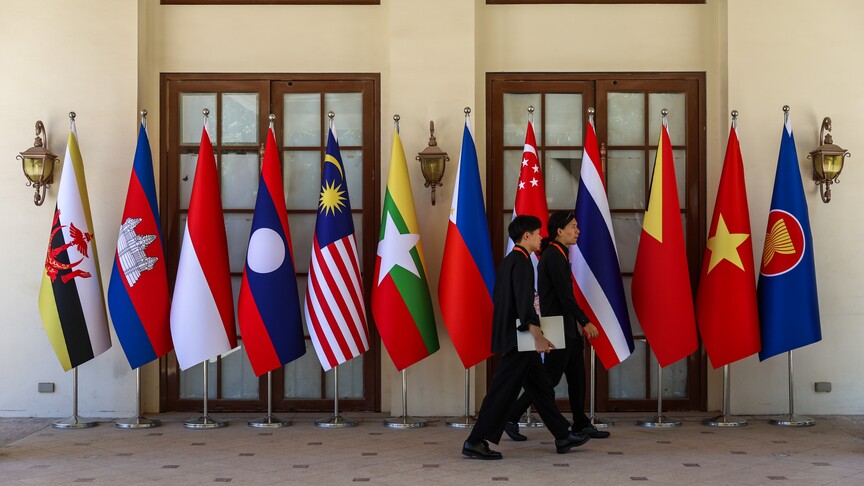
The crisis now looms over this week’s summit of the Association of Southeast Asian Nations (ASEAN) in the Philippine city of Cebu, where leaders are expected to confront mounting concerns over energy security, inflation and the region’s vulnerability to geopolitical turmoil far beyond its borders.
The 11-member bloc has already scaled back the summit, shortening it from five days to three and moving more than 600 preparatory meetings online as soaring fuel costs ripple across the region.
The disruptions stem from the conflict surrounding Iran and the Strait of Hormuz, a corridor that handles roughly 20% of global oil shipments, most of them bound for Asia.
For Southeast Asia, one of the world’s most import-dependent energy regions, the impact has been severe.
ASEAN’s collective response under scrutiny
Gathering under the summit theme Navigating Our Future, Together, discussions are expected to focus on energy and food security, disaster resilience and regional cooperation amid mounting global instability.
Analysts say the crisis stemming from disruptions in the Strait of Hormuz is exposing deeper questions about ASEAN’s ability to respond collectively to external shocks.
Holding the summit under such conditions is “perhaps” already “a relative success,” Georgi Engelbrecht, senior analyst for the Philippines at the International Crisis Group, told Anadolu.
“Everyone is concerned by the crisis,” he added, pointing to the Philippines’ national emergency, Vietnam’s rising inflation and Indonesia’s attempts to mediate between the US and Iran.
“The question is if ASEAN is able to play a collective role,” he said.
While governments across the region have rolled out national measures to manage shortages and rising prices, ASEAN as a bloc has so far lacked a unified strategy.
The leaders are expected to revisit proposals such as keeping trade “open and predictable,” avoiding export restrictions on essential goods and accelerating the ASEAN Power Grid project aimed at improving regional energy-sharing and resilience against external shocks.
The agenda is also expected to include the safety of ASEAN nationals in the Middle East, regional economic resilience and a collective response to the ongoing energy disruptions.
Regional tensions
Beyond energy concerns, ASEAN leaders may also confront ongoing regional disputes threatening the bloc’s cohesion.
“When it comes to conflict issues, they may come up, but not as prominently given their complexity,” said Engelbrecht.
Myanmar remains a particularly sensitive issue. The country’s military leadership has been barred from ASEAN summits since the 2021 coup. While Myanmar recently elected former junta chief Min Aung Hlaing as president in widely criticized elections, his attendance remains unlikely.
The summit is expected to be attended by leaders from the Philippines, Thailand, Indonesia, Brunei, Cambodia, Laos, Malaysia, Singapore, Vietnam and Timor-Leste – the bloc’s newest member.
However, the fragile ceasefire between Thailand and Cambodia also hangs over the summit, with concerns that unresolved border and maritime disputes could undermine broader regional coordination.
The summit is also likely to revisit negotiations over the South China Sea Code of Conduct between ASEAN and China, though Engelbrecht cautioned against expectations of a major breakthrough.
“It remains to be seen how prominently it will be featured in the main meetings and in the readouts,” he said.
ASEAN and China agreed in 2023 to accelerate negotiations and aim to conclude the code within three years, building on an initial 2002 commitment.
“Even reporting on the Code of Conduct talks has been reduced, most likely since it remains more and more difficult to achieve,” Engelbrecht said, adding that mitigating the impact of disruptions in the Strait of Hormuz is now a more immediate priority for regional countries.
The main summit meeting will take place Friday after two days of ministerial and senior officials’ meetings.
As for concrete outcomes from the summit, Engelbrecht said expectations remain modest, with a joint statement much more likely than major policy breakthroughs.
“But it is not impossible,” he added. “Diplomatic language will cover issues beyond economic security.”