Yasin Güngör
23 September 2026•Update: 23 September 2026
Japan’s prime minister warned Tuesday that North Korea's advancing nuclear and missile capabilities pose a serious threat to international peace and security, calling for the country's complete denuclearization in line with UN Security Council resolutions.
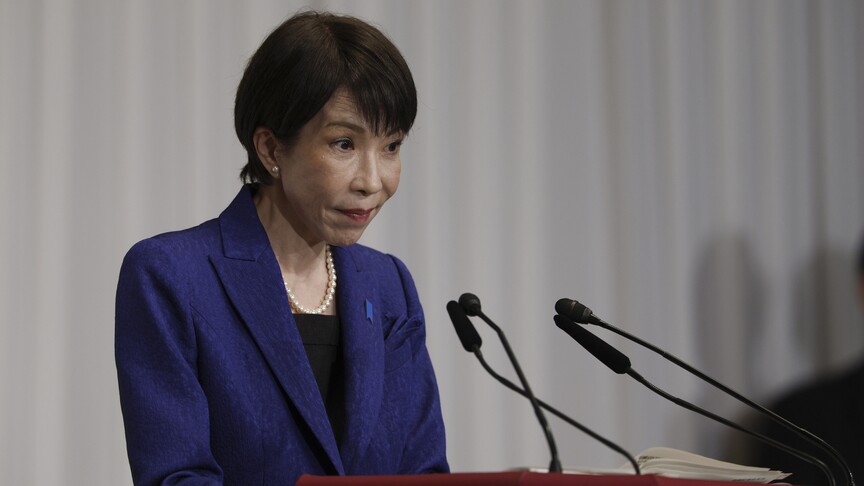
"The advancement of North Korea's nuclear and missile programs, as well as its use of malicious cyber activities, including cryptocurrency thefts as source of funding, are clear violations of relevant Security Council resolutions and pose a serious threat to international peace and security," Sanae Takaichi told world leaders during the 81st UN General Assembly in New York.
Takaichi also voiced concern over growing military cooperation between Moscow and Pyongyang, citing "concerns regarding the proliferation of nuclear and missile-related technologies through the strengthening of military cooperation between Russia and North Korea."
AI governance
Turning to emerging technologies, Takaichi highlighted national security challenges stemming from rapid digital expansion, stressing the urgent need for safeguards against propaganda and disinformation.
Telling how Tokyo initiated the Hiroshima AI Process to establish international guidelines for generative AI, Takaichi said Japan intends to host an AI safety summit "at the earliest opportunity" alongside international partners to address risks associated with highly capable frontier models.
UN Charter and Security Council reform
Takaichi said the 81-year-old UN Charter needs a formal review, including implementing a 2005 General Assembly resolution to delete outdated "enemy states" clauses in line with world leaders’ collective resolve.
"Rather than lamenting the institutional fatigue of the United Nations, member states should unite with one heart, vigorously advance reform of the United Nations, and transform the organization into a more resilient and effective United Nations," she urged during her address.
Takaichi also said the composition of the UN Security Council reflects the global balance of 1945 rather contemporary geopolitical realities.
She called for expanding both permanent and non-permanent seats without delay to bolster the council's legitimacy and global representation.