Islamuddin Sajid
13 August 2026•Update: 13 August 2026
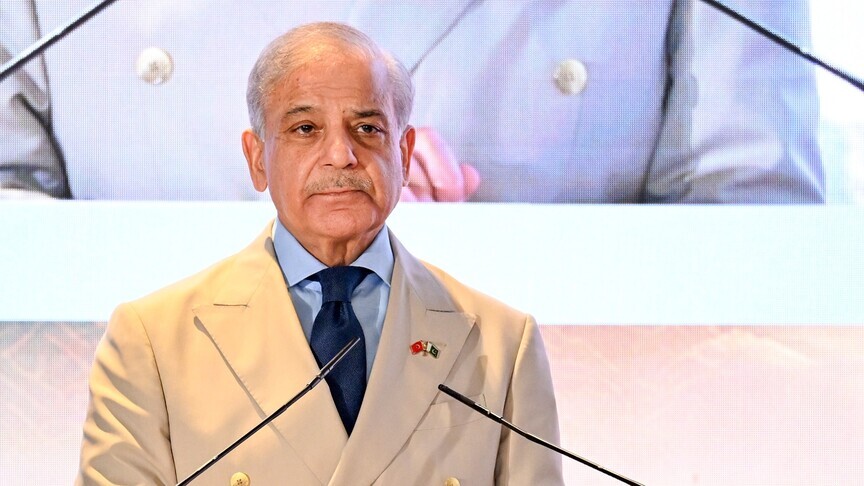
Pakistan Prime Minister Shehbaz Sharif warned India late Thursday that every drop of Indus water is a “red line” for Pakistan, stressing that Islamabad wants peace but will respond forcefully to any threat to its sovereignty or defense.
Sharif said Pakistan’s desire for peace should not be interpreted as weakness.
“Pakistan wants peace, not war, and that desiring peace should not be perceived as a sign of weakness,” he said, addressing a ceremony in Islamabad marking the inauguration of the Yadgar-i-Fatah monument on the eve of Pakistan’s 80th Independence Day. “With dignity and determination, we are resolute for peace.”
He said Pakistan emerged as a “guarantor of peace” in the region, but warned that any challenge to its sovereignty or defense would trigger a stronger response.
“If anyone challenges Pakistan’s sovereignty and defense, they will receive an even stronger reply than in May 2025,” said the premier, referring to the military confrontation between Pakistan and India last May.
Sharif criticized India’s unilateral suspension of the Indus Waters Treaty (IWT), saying New Delhi took the step after what he described as its "defeat" in May.
“I warn that every drop of water is our red line. If India does not keep on the right track, we will give it a direct response,” he said.
New Delhi did not immediately react to Sharif’s statement.
Last April, New Delhi held the IWT in abeyance following an attack in Indian-administered Kashmir’s Pahalgam that killed 26 victims, blaming it on Islamabad.
Pakistan rejected the claims and said any attempt to suspend its water share will be considered as an “act of war,” noting the treaty could not be unilaterally suspended.
The two arch-rivals later engaged in four days of cross-border armed clashes in May, before US President Donald Trump brokered a ceasefire.
The Permanent Court of Arbitration, based in The Hague, noted in June 2025 that the decades-long water-sharing pact does not have a provision for the unilateral "abeyance" or "suspension" and that the court had jurisdiction over disputes under the IWT.
The IWT divided the six rivers of the Indus Basin between the two countries. While India received the three eastern rivers --- Sutlej, Beas, and Ravi -- Pakistan was assigned control over the three western rivers -- Indus, Jhelum and Chenab.
Pakistan said India’s planned hydropower dams will cut flows on the river, which feeds 80% of its irrigated agriculture.
Speaking at a UN event marking World Water Day 2026, India’s Permanent Representative Harish Parvathaneni said the IWT will remain in abeyance as New Delhi was compelled to take the decision after repeated "provocations and failure of bilateral engagement."
Sharif, meanwhile, also congratulated Pakistanis on Independence Day and paid tribute to the sacrifices made during the country’s struggle for independence.