Faisal Mahmud
07 October 2026•Update: 07 October 2026
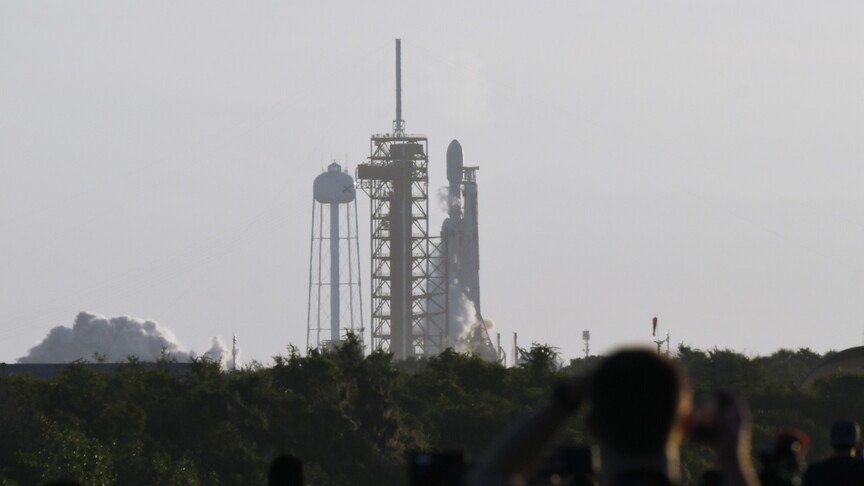
South Korea launched its homegrown Nuri space rocket Wednesday on its fifth flight, carrying 15 satellites into orbit, including five intended for the country's first domestically launched microsatellite constellation.
The 200-ton rocket blasted off from the Naro Space Center in Goheung, about 400 kilometers (248 miles) southwest of Seoul, at 12.25 pm local time, Yonhap News Agency reported.
The payload comprises five New-space Earth Observation Satellite Constellation for National Safety (NEONSAT) microsatellites and 10 CubeSats.
The five NEONSATs, numbered 2 through 6, were scheduled to be deployed at intervals of 35 to 40 seconds at an altitude of around 575 kilometers (357 miles), followed by the CubeSats.
Each NEONSAT weighs less than 100 kilograms (220 pounds) and carries an electro-optical camera capable of distinguishing objects as small as 1 meter (3.3 feet) in black-and-white imagery.
The satellites are designed to monitor the Korean Peninsula and surrounding areas for national security and disaster response.
Another five NEONSATs are due to be launched on Nuri's sixth flight next year, completing the 10-satellite constellation.
In November 2025, Nuri successfully placed 13 satellites into orbit during its fourth flight, including the CAS500-3 and 12 CubeSats. That mission marked the rocket's first nighttime launch and its first led by private company Hanwha Aerospace.