Dilara Zengin, Ceren Gokkoyun and Emir Yildirim
15 September 2026•Update: 15 September 2026
The US is preparing for critical midterm elections amid challenging economic conditions due to sharp energy price increases, rising housing costs and persistently high interest rates impacting daily lives.
The challenging macroeconomic landscape is pressuring household budgets and shaping voter sentiment ahead of the Nov. 3 elections that will decide the balance of power in Congress.
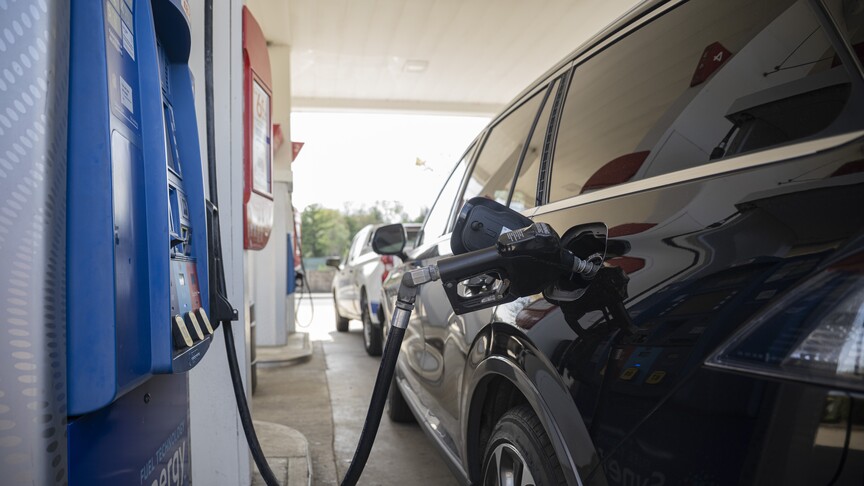
The most visible indicator of the current state of the US economy is the increase in fuel prices.
Ongoing Middle East tensions and oil price fluctuations fuel energy cost concerns in the US.
The national average price of gas reached $4.32 a gallon as of Sept. 14, up 35.9% from $3.18 a year earlier, according to the American Automobile Association (AAA).
Diesel prices reached a record $6.23 a gallon, marking a 68.7% annual surge, while prices exceeded $8 a gallon in California. The primary fuel for transport, logistics and agriculture was below $4 a gallon before the Russia-Ukraine war.
The US consumer price index (CPI) rose 0.4% in August and 3.4% on an annual basis, driven by fuel spikes, while core inflation climbed 0.3% month-on-month.
Wholesale costs also rose, with the producer price index (PPI) climbing 0.4% in August and surging 5.4% on an annual basis, above estimates.
Markets expect the Fed to raise its benchmark interest rate by 25 basis points at its two-day meeting commencing on Tuesday, according to CME Group.
Meanwhile, the average 30-year fixed mortgage rate rose to 6.85% in early September, marking its highest level since June 2025, according to the Mortgage Bankers Association (MBA). The surge drove refinancing applications to a 16-month low.
First-time homebuyers were effectively sidelined as the mortgage rate approached 7%, while existing homeowners were prompted to retain their low-interest properties, leading to ongoing rent increases nationwide.
Government borrowing costs continued to rise as the yield on the US 10-year Treasury note reached its highest level since July 2007, at 5.03%, despite the Treasury Department expanding its bond buyback program from a $2 billion cap to at least $4 billion per operation to boost market liquidity.
US public debt exceeded the $40 trillion threshold for the first time on Aug. 18, rising by nearly $4 trillion since President Donald Trump began his second term in office in January 2025.
The federal government’s net interest payments on the public debt exceeded $1 trillion in the first 11 months of the fiscal year, driven by higher interest rates and structural deficits.
With roughly 50 days until the November midterm elections, Trump said he would pay $5,000 to every American adult if Republicans secure both the House and Senate.
Conservative supporters embraced the proposal, while it was met with sharp criticism from liberal media outlets, as financial analysts argued that the $1.2 trillion measure to effectively buy votes would expand the deficit and lead to legal controversy.