Burhan Sansarlioglu and Ali Canberk Ozbugutu
02 April 2026•Update: 02 April 2026
ISTANBUL
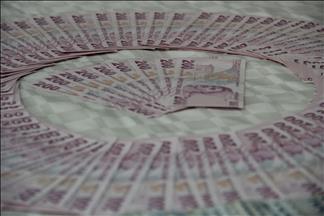
The US Dollar Index rose 1.43% in the first quarter, outperforming other currencies as geopolitical tensions in the Middle East pushed up oil prices and reshaped expectations for inflation and central bank policy.
The US dollar posted its strongest quarterly performance since October–December 2024, with investors turning to the currency as a safe haven amid disrupted energy markets and uncertain economic forecasts.
Demand for dollar-denominated assets increased following joint US and Israeli attacks on Iran and Tehran’s retaliatory strikes, which heightened concerns over energy supply security, lifted oil prices and raised the risk of accelerating global inflation.
Markets now increasingly expect central banks to maintain a cautious and tight policy stance as higher energy costs continue to influence asset pricing.
The US Dollar Index closed the quarter at 99.7 after briefly surpassing the 100 level for the first time since Nov. 25, 2025.
The euro-dollar exchange rate ended the quarter at 1.1554, down 1.7%, while the dollar rose 0.8% against the Swiss franc to 0.799 and gained 1.2% against the Japanese yen to 158.8.
The euro fell to 1.1411 against the dollar, its lowest level since August 2025, while the dollar climbed above 160 yen for the first time since July 2024.
Despite the recent gains, the US Dollar Index has fallen 9.4% in 2025, marking its sharpest decline since 2017.
Jane Foley, a senior foreign exchange strategist at Rabobank, said investors tend to prioritize liquidity over returns in turbulent periods, reinforcing the dollar’s role as a safe haven.
She said demand for the dollar rises quickly during crises because of its central role in global trade and payment systems, while a reluctance to take long-term positions after its decline in April 2025 also contributed to renewed interest.
Foley said recent developments have eased doubts about whether the dollar had lost its safe-haven status, at least in the short term.
She added that further escalation in the Middle East crisis would likely continue to support the dollar.
*Writing by Emir Yildirim