Mücahithan Avcıoglu
21 April 2026•Update: 21 April 2026
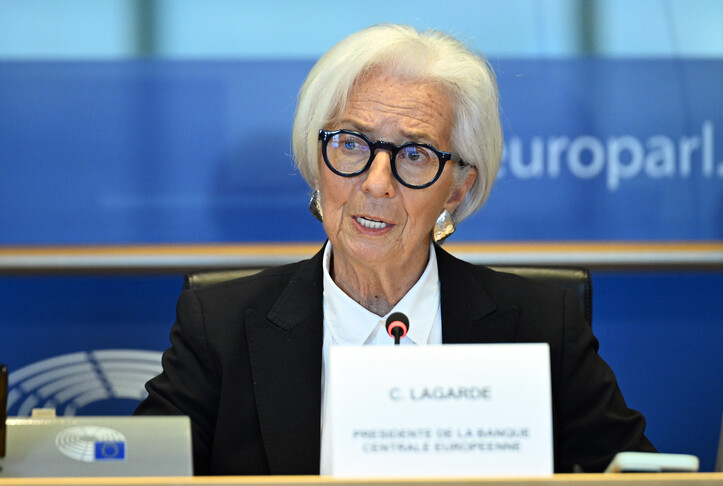
European Central Bank President Christine Lagarde warned Monday that Europe faces a highly uncertain economic outlook as the conflict around the Strait of Hormuz continues to disrupt global energy supplies and heighten inflation risks.
Speaking in Berlin at an event organized by the Association of German Banks, Lagarde said the closure of the Strait of Hormuz — the world’s most critical energy chokepoint — has delivered a fresh shock to an already fragile global economy shaped by the pandemic, war in Europe, the energy crisis, and rising trade barriers.
On monetary policy, Lagarde said the ECB is closely monitoring two key variables: the duration of the disruption and the extent to which higher energy costs feed into broader inflation.
She noted that firms’ selling price expectations have risen and households are paying closer attention to inflation following the previous energy shock, but weaker consumer sentiment and slower growth may limit the scale of price and wage pressures this time.
Lagarde also urged governments to avoid broad-based fiscal support that could fuel inflation or strain public finances, stressing that measures should be temporary, targeted, and preserve price signals needed to reduce energy consumption.
“The lesson of 2022 is clear,” she said. “Support that is temporary, targeted and preserves the price signal can protect the most vulnerable without making inflation worse or public finances less stable.”
She reaffirmed that the ECB remains committed to its price stability mandate and will act as needed to bring inflation back to 2% over the medium term.
Lagarde described the economic outlook as “deeply uncertain,” pointing to the stop-start nature of the conflict — including war, ceasefire attempts, peace talks, blockades, and reversals — which complicates assessments of both duration and impact.
She said the net loss of oil supply is estimated at around 13 million barrels per day, roughly 13% of global consumption, even before factoring in the impact of the US blockade. Still, she noted markets appear to be betting the disruption will be temporary, with oil prices rising above the ECB’s baseline assumptions but not yet reaching levels consistent with more adverse scenarios.
Lagarde added that European natural gas prices remain below baseline assumptions, partly due to gas-to-coal switching in Asia and mild weather in China, suggesting the direct energy shock could remain contained if the conflict is resolved quickly.
However, she warned that a prolonged disruption could widen the gap between energy supply and demand and increasingly spill over into other sectors through shortages of key inputs, including helium, fertilizers, and methanol. She also cited signs of localized strain, noting that jet fuel prices have roughly doubled since the conflict began and that rationing has been imposed at some airports since early April.