Ali Canberk Ozbugutu and Emir Yildirim
05 October 2026•Update: 05 October 2026
Global markets started the new week on a mixed note despite signs of cooling in the US labor market and Fed officials signaling a pause in rate hikes last week.
The probability of the Fed keeping its policy rate unchanged this month exceeded 80%, while the likelihood of a 25-basis-point rate hike in December reached 95%.
Investors are now focused on the Fed’s latest meeting minutes, due to be released this week, and global Purchasing Managers’ Index (PMI) data scheduled for Monday.
Investors turned to riskier assets as expectations that the Fed will pause its hawkish measures this month increased, while ongoing geopolitical tensions in the Middle East continued to affect markets.
The Iranian-backed Yemeni Houthi group said it attacked Saudi Aramco facilities in Riyadh and Khurais with ballistic missiles and drones.
Brent crude oil climbed back above $100-a-barrel as attacks on regional energy facilities fueled concerns over oil supplies.
The US is reportedly planning to send additional troops and aircraft to Israel amid the potential for further tensions in the Middle East, Israeli media reported.
Israel is expecting a new conflict with Iran or a rapid escalation of regional tensions and is surveying potential targets in Iran to strike in the event of a large-scale conflict.
Israel and the US Central Command (CENTCOM) are reportedly continuing military coordination under various scenarios, including potential missile attacks from Iran.
Demand for the US dollar increased amid heightened geopolitical tensions, pushing the US Dollar Index up 0.5% to 102.5 on Monday, its highest level since April 2025.
Other assets also saw increased volatility as the dollar appreciated. Gold started the week on a bearish note amid expectations of a Fed rate hike in December if not in October, while silver remained bullish amid expectations of a global rally driven by technology and electrification.
Gold was down 0.2% at $4,134 per ounce, while silver was trading 1.1% higher at $61 per ounce on Monday.
The US 10-year Treasury yield started the week flat at 5.27%, while the two-year yield was slightly lower at 4.82%.
December-delivery Brent crude was trading down 0.4% at $101.8 a barrel.
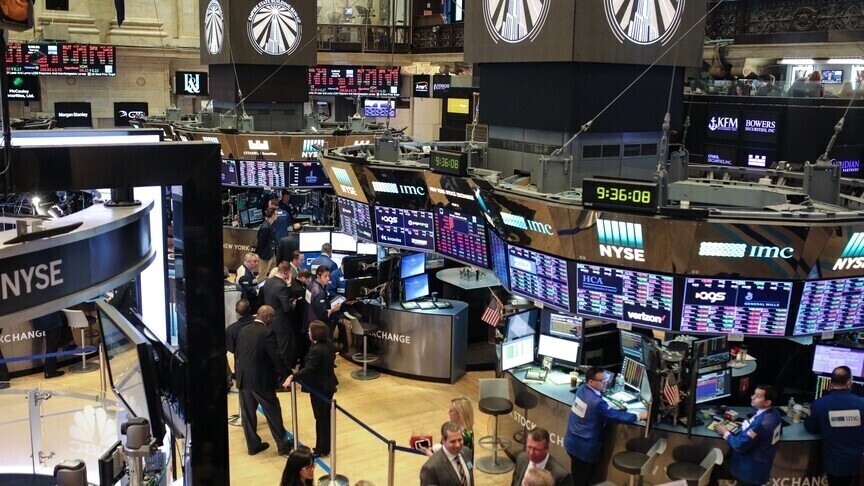
The S&P 500 ended last week up 0.7%, the Nasdaq Composite gained 1.19%, and the Dow Jones Industrial Average rose 0.49%. The New York Stock Exchange started this week on a mixed note.
Meanwhile, investors turned their attention to Producer Price Index (PPI) and PMI data due to be released across Europe on Monday.
The energy component of the PPI will be closely monitored for insight into the European Central Bank’s (ECB) potential monetary policy path.
The spread between French and German 10-year bond yields widened to 141 basis points, the highest level since 2012.
The ECB may intervene to prevent risks from France’s borrowing costs from spreading across the broader region, analysts said.
The UK’s FTSE 100 rose 0.32%, Italy’s FTSE MIB 30 gained 0.49%, France’s CAC 40 increased 0.79%, and Germany’s DAX 40 climbed 1.17% on Oct. 2. European indexes started Monday on a mixed note.
Near Monday’s close, trading activity in Asian equity markets remained subdued as South Korean and Chinese markets were closed for holidays, while those that were open traded mixed.
Japan’s services PMI fell to 51.3 in September, while its composite PMI dropped to 52.3, slowing from the previous month.
The country’s consumer confidence, meanwhile, exceeded expectations at 35.4.
Japan’s two-year bond yield fell around 10 basis points to 1.9%, following data showing that the country’s economic activity was slowing.
Japan’s Nikkei 225 rose 2.2%, while Hong Kong’s Hang Seng dropped 0.3% near Monday’s close.