ANKARA
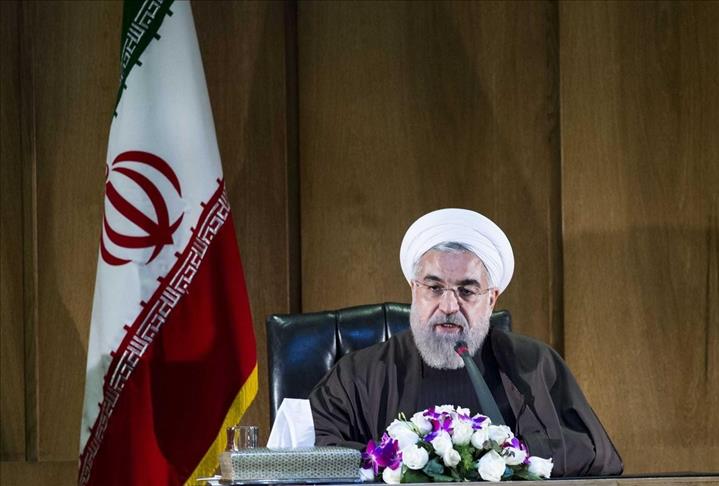
Iran will succeed in nuclear negotiations to remove the sanctions imposed on it by the United Nations Security Council, Iranian President Hassan Rouhani said Wednesday.
Rouhani predicted that the sanctions will be removed "in the near future," according to Iran's official news agency IRNA.
The UN Security Council had passed a number of resolutions against Iran between 2006 and 2014 regarding its nuclear program, from banning supplies of nuclear technology and materials to the country to freezing financial assets of key people and companies in Iran.
The sanctions have negatively affected the Iranian economy, including its oil exports and its financial sector.
Iran's Supreme Leader Ayatollah Ali Khamenei said Wednesday that the cure for Iran's economic problems is not in Lausanne, Geneva or New York.
"Nobody can deny the impact of the sanctions on the Iranian economy, but everybody knows well that embargoes cannot prevent the success of public organized programs for the promotion of domestic production," Khamenei was quoted as saying by IRNA.
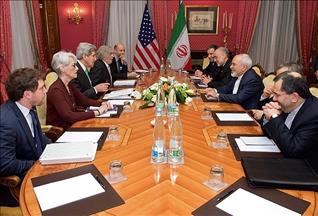
In Lausanne, Iran and the P5+1 countries reached a framework deal that envisages curbing the country's nuclear activities in return for removing sanctions. The sides met in New York on Wednesday to continue drafting the text of a final nuclear agreement, which has a June 30 deadline.
"The U.S. and western countries involved in the nuclear talks should be aware that there are some requirements for reaching a comprehensive and lasting agreement," Iran's Foreign Minister Mohammad Javad Zarif was quoted as saying Tuesday by Iran's government-owned Tasnim News Agency.
US Senate rejects bill
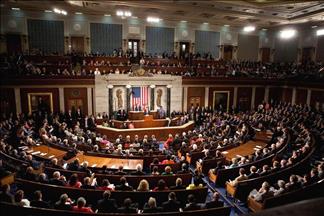
Meanwhile, the U.S. Senate rejected an amendment Tuesday that would have regarded any nuclear agreement between Iran and the U.S. as an international treaty.
With 39 against 57 votes, the Senate rejected "to declare that any agreement reached by the President relating to the nuclear program of Iran is deemed a treaty that is subject to the advice and consent of the Senate," according to the U.S. Senate website.
If approved, the bill would have forced U.S. lawmakers in the Senate to vote on a final nuclear agreement reached with Iran, requiring two-thirds of its 100 members for approval.
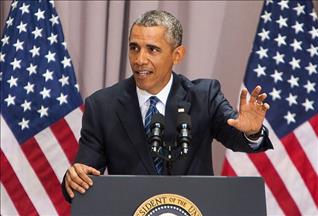
U.S. President Barack Obama threatened to veto the bill, believing that it is a threat to the ongoing nuclear negotiations.