Mucahithan Avcioglu
25 June 2026•Update: 25 June 2026
- Fed’s preferred inflation gauge increases 4.1% year-on-year, highest since April 2023
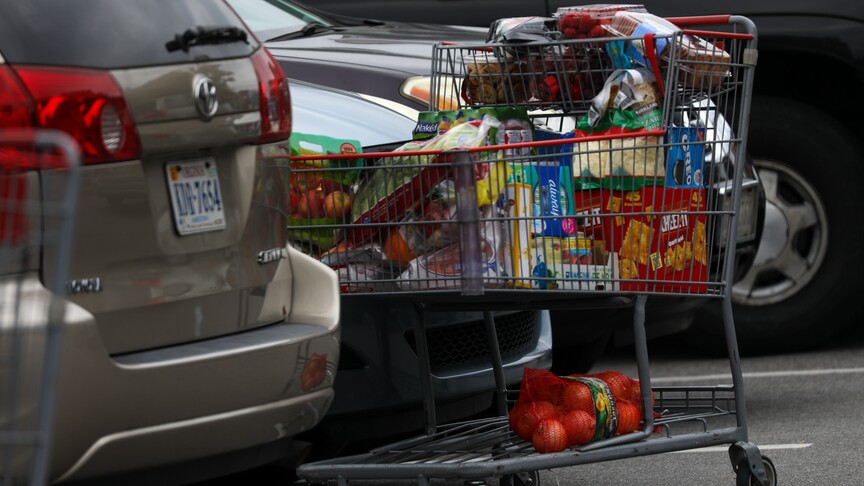
US consumer spending accelerated in May despite inflation rising to its highest level in more than three years, according to official data released Thursday.
Real personal consumption expenditures, adjusted for inflation, rose 0.3% month-on-month in May, beating market expectations of a 0.2% increase, the Bureau of Economic Analysis (BEA) said.
In current dollars, personal consumption expenditures increased $156.1 billion, or 0.7%, from the previous month.
Spending on services rose $94.3 billion, led by health care, housing and utilities, and financial services and insurance. Spending on goods increased $61.8 billion, supported by motor vehicles and parts, gasoline and other energy goods, and recreational goods and vehicles.
The figures showed that US households continued to spend despite stronger price pressures.
The personal consumption expenditures (PCE) price index, the Federal Reserve’s preferred inflation gauge, rose 4.1% in May from a year earlier, in line with market expectations and marking the highest annual increase since April 2023.
Excluding food and energy, the core PCE price index increased 3.4% year-on-year, also matching estimates.
On a monthly basis, the PCE price index rose 0.4%, while the core PCE price index increased 0.3%.
Personal income increased $181.6 billion, or 0.7%, in May, while disposable personal income rose $164.9 billion, also 0.7%.
The personal saving rate stood at 3%, with personal savings totaling $704.2 billion.
A separate BEA report showed that the US economy grew at an annualized rate of 2.1% in the first quarter of 2026, revised up from the previous estimate of 1.6%.
The upward revision primarily reflected a downward revision to imports, which are subtracted in the calculation of GDP, partly offset by a downward revision to consumer spending.