By Magda Panoutsopoulou
ANKARA
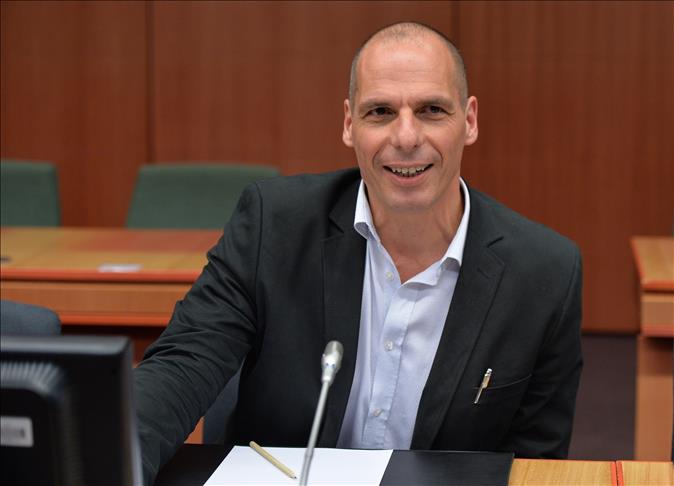
Although Greek Finance Minister Yanis Varoufakis on Monday told the Greek newspaper Ekathimerini that "no red lines have been crossed", the Greek government is coming very close to a compromise with its European creditors.
New proposals have been sent to Greece’s European creditors over the weekend. These include:
- An overhaul of Greece’s value-added tax, creating two separate rates, a higher rate of 18 to 20 percent for certain items, and a lower rate of eight to nine percent
- The solidarity tax on incomes above €30,000 euros will be retained (there had been a proposal to reduce it by 30 percent) and new taxes are to be introduced
- Pensions will be reformed: The government is proposing the scrapping of early pensions as an alternative to stopping public subsidies to pension funds altogether.
- Greece has asked three firms to submit bids for a majority stake in Piraeus, the Athens port, an important privatization.
All of this brings Varoufakis and the Greek government much closer to the position of the Eurogroup and the institutions, the International Monetary Fund, the European Central Bank, and the European Union. At the meeting on May 11 with the Eurogroup, Pierre Moscovici from the European Commission noted that pension reform has been one of the most important differences between the creditors and the Greek government.
The one area in which Varoufakis and his government have not given in to creditor demands is labor market reform, and this is a sticky issue that could become a deal-breaker. The Greek government is holding out for collective labor contracts, and refusing to allow group layoffs.
Regarding the points of agreement with the creditors, Varoufakis said in a recent television interview: "Greece cannot slip back into generating primary deficits, it must carry out market reforms or sink; the state of the labor market is pitiful, and the country's pension system was unsustainable."
So close is Varoufakis to the 'red lines' that he recently said an agreement is only being held up by "political restrictions".
"In the corridors and behind closed doors they tell me 'you're right but how can I get this past the parliament?' You understand that we have a problem of consistency between what must be done in order to have a comeback and the things that get past the parliaments," Varoufakis said.
Nevertheless in his speech at the 19th Economist Roundtable with the Greek government in Athens on Friday, Varoufakis stated that "Greece’s goal is an agreement with the creditors that provides a lasting solution and will allow the country to make a comeback, not a hasty patch-up job to get the next installment of loans."
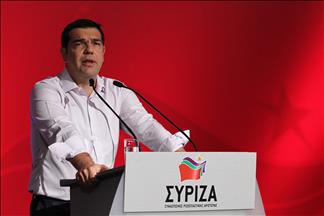
Although Varoufakis is no longer chief negotiator at the meetings with creditors -- he was replaced by Prime Minister Alexis Tsipras with Deputy Foreign Minister Euclid Tsakalotos at the end of April -- he is working in Athens, trying to steer a course between compromising with creditors and maintaining the anti-austerity stance that was the SYRIZA party’s electoral mandate.
He has consistently maintained in principle that he will not sign an agreement he does not believe in. "As finance minister, I will not agree to a package that is macro economically inconsistent. If I do this, I will be yet another finance minister that signs a medium-term fiscal program that he knows cannot work," he said in a recent interview.
But, in practice, the proposals from his ministry are getting more and more conform with what creditors are asking.
The Greek government is, of course, under increasing pressure from lack of funds. Before making the last €750 million ($855.9 million) debt payment to the IMF, Tsipras sent a letter to the organization’s managing director Christine Lagarde stating that the coffers were close to empty in Greece.
Another payment to the IMF of €300 million is due on June 5, and this time the government may not be able to scrape it together.
Under pressure like this, the Greek government may well have to cross a few more red lines, in order to obtain the release of the next €7.2 billion ($8.2 billion) tranche of the bailout payments according to the creditors’ plan.