Efe Ozkan and Kanyshai Butun
18 April 2026•Update: 18 April 2026
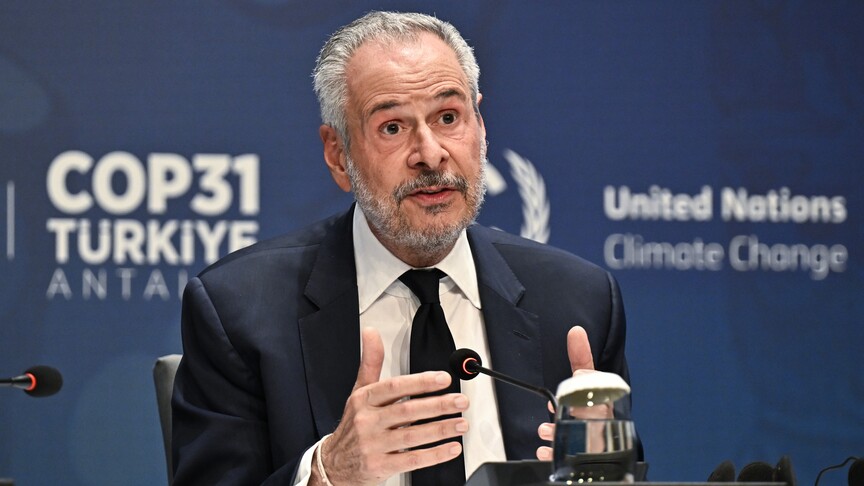
Climate is now embedded in geopolitics, energy, and policy discussions, moving beyond a “niche theme,” said former COP30 President Andre Aranha Correa do Lago.
Talking to Anadolu during the Fifth Antalya Diplomacy Forum on Saturday, Correa do Lago underlined that even discussions on Middle East tensions involve climate considerations.
“When you talk about wars, you're talking about people, you're talking about agriculture, you're talking about justice. All these elements have already been integrated into the climate. So even if you don't say the word climate in each room of this meeting, in fact, it is present,” he said.
Speaking about the Conference of the Parties (COP) success, he underlined that the body must produce progress in negotiations, deliver outcomes the public can understand as improving their lives, and provide results for the business sector.
Civil society expectations must also be addressed, while both developed and developing countries must be able to view outcomes as a success, he underlined.
He added that these elements should be planned during the year of Türkiye’s presidency at COP31.
On expectations from COP31, including calls for clearer commitments to phase out fossil fuels, Correa do Lago said the negotiating text is only one dimension of COP outcomes.
He noted that the issue of fossil fuels was already addressed in Dubai, where there was an international consensus on transitioning away from them.
“So there was already the international consensus on transitioning away from fossil fuels,” he added.
He said that future COPs, including in Türkiye, are expected to advance new areas.
Correa do Lago also underlined that Türkiye will need to engage in an internal dialogue on how it can contribute to the climate agenda and how its population can benefit from it.
“Because this is an agenda that has a very strong impact on the economy, on technology, on quality of life, and so many other aspects,” he said. “So there is the dimension of the negotiation itself that is very rigid, and there is the dimension for the country, how the country integrates itself in this agenda.”