Alyssa McMurtry
24 August 2026•Update: 24 August 2026
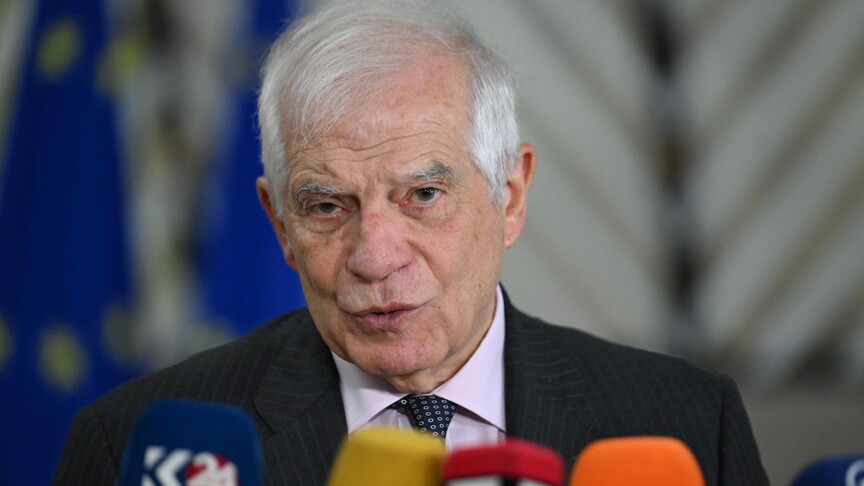
Former EU foreign policy chief Josep Borrell on Monday described Europe's response to the mass migrant crossing into Spain's Ceuta enclave as "hysterical, disproportionate and absurd," accusing much of the bloc of failing to show solidarity with the country.
Speaking in Santander ahead of a university conference, Borrell strongly rejected claims that Spain's migration policies, including its mass regularization initiative earlier this year, were responsible for the crisis.
"We need to stand up to those who say that the Ceuta crisis is a consequence of Spanish migration policy. That is not true," Borrell told journalists.
Around 72,000 people irregularly crossed from Morocco into Ceuta on July 30-31, according to the Spanish government's official estimate, in an unprecedented influx that briefly brought a number of migrants almost equivalent to the enclave's population.
The crisis triggered sharp criticism of Madrid from other European governments. A group of 22 EU countries signed an open letter saying Spain's relatively open migration policies acted as a "pull factor."
"It was a moment when Europe needed to show solidarity with a state that had a problem defending its borders – common borders with all of Europe," Borrell said.
He also defended Spain's handling of unaccompanied minors and potential asylum-seekers still in Ceuta, saying their legal rights must be respected.
"The Spanish government is right to emphasize that minors have rights. The laws must be applied," he said.
Around 2,500 minors and another 2,500 potential asylum-seekers remain in Ceuta, according to Spanish daily El Pais. Both groups have specific protections under Spanish and European law.
Borrell said Europe also needs to strengthen its borders as migration pressure adds to a series of geopolitical challenges facing the bloc.
He argued that Europe is simultaneously confronting Russia, China's growing industrial power and a US government that he said regards Europe as a political adversary.
"The EU must aspire to become a geopolitical actor in a world in which we have discovered that we have many more adversaries than allies," Borrell said.
Former Belgian Prime Minister Guy Verhofstadt, speaking at the same event, also called for a stronger and more integrated Europe.
"The new international order forces Europe to wake up," Verhofstadt said. "It is a foundational moment for the union."