Necva Taştan Sevinç
27 August 2026•Update: 27 August 2026
Greece has reported 232 locally acquired West Nile virus cases and 19 related deaths during the 2026 transmission season, health authorities said Thursday.
Seventy-five new cases were diagnosed in the week ending Aug. 26, marking a sharp rise in infections, according to the National Public Health Organization’s latest epidemiological surveillance report.
The outbreak is nearly three times larger than during the corresponding period last year, Greek daily Tovima reported.
Of the confirmed patients, 165 developed complications affecting the central nervous system, including encephalitis, meningitis or acute flaccid paralysis.
Another 67 experienced mild symptoms or showed no neurological complications.
All 19 people who died were over 65, with a median age of 85. The victims ranged in age from 66 to 92.
Eighty-nine patients remain hospitalized across the country.
Deputy Health Minister Marios Themistokleous said mathematical models suggest that 2026 could become a record year, potentially exceeding the severe 2018 outbreak, when Greece registered 317 cases and 59 deaths.
Health authorities expect the current wave to peak within the next one to two weeks, although new infections are likely to continue through at least the end of September.
Health Minister Adonis Georgiadis said “there is no reason to panic,” stressing that the healthcare system is not under pressure.
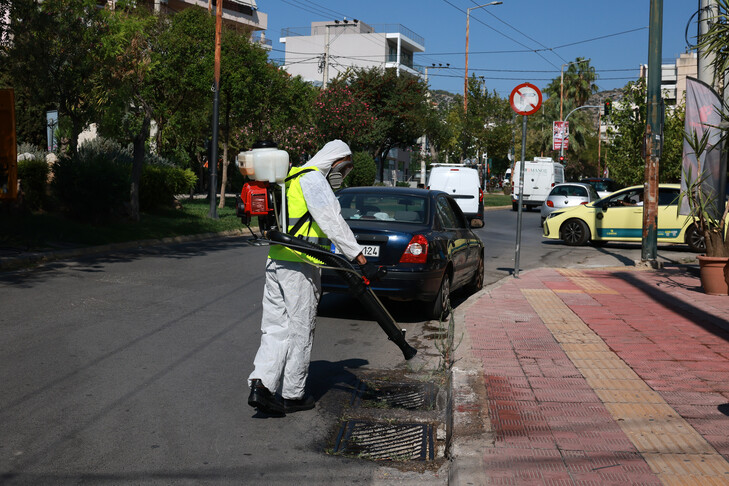
A significant share of infections has been detected in the Attica region, where municipalities have intensified mosquito-control measures.
Authorities in Pallini are using a digital risk map to monitor storm drains and installing special traps targeting female mosquitoes.
In Filothei-Psychiko, emergency nighttime spraying was conducted within a 300-meter (984-foot) radius of a confirmed case.
Health authorities urged residents, particularly older people, to continue taking precautions against mosquito bites throughout the fall.