06 November 2015•Update: 11 November 2015
ATHENS
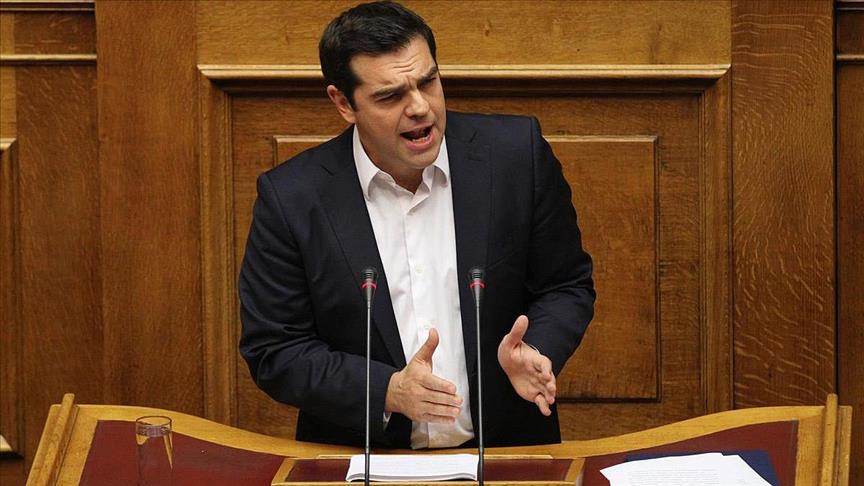
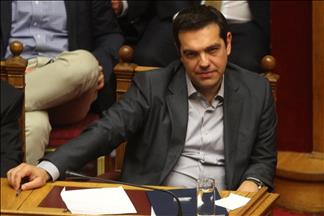
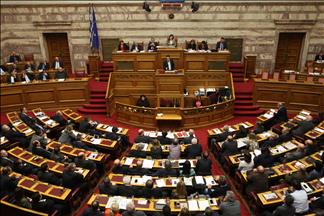
The Greek parliament early on Friday passed legislation enacting economic reforms required by the bailout deal with its European creditors.
But not all of the reforms were included as required by the third Greek bailout agreement for government to obtain additional funds from the bailout.
The bill was passed into the law with the backing of 153 MPs from the ruling government coalition of Syriza and the Independent Greek parties.
The Greek government must enact a series of economic reforms to obtain the next €2 billion ($2.17 billion) tranche bailout funds, in the three-year, €86 billion ($93.5 billion) bailout scheme.
The new law increases the tax on diesel used by farmers for agricultural purposes, reforms the pension system, forces Greece to comply with EU energy efficiency rules, and establishes conditions for the sale of Greece's largest port.
One such measure is the reduction of the number of installments allowed to Greek citizens in repaying money owed in taxes or social security. Currently, they can enjoy 100 installments, but the bill would limit that number in certain cases.
Most significantly, the bill introduced a change for the better for borrowers who have settled their debts with interest-free installments and who owe the tax authority amounts less than €5,000 ($5,438). Until recently, such interest-free installments were allowed only if the debtor’s did not own property at a value exceeding €150,000 in total. But now, only property owned with buildings, and not just land, will be included in the assessment.
But sharp attacks from the opposition forced the government to withdraw proposals for increased taxes on microbreweries, and measures imposing value-added tax on private education.
The latter proposal is one required by the bailout agreement, and so the government is negotiating a solution for it. Deputy Finance Minister Tryfon Alexiadis told the Greek press that the issue would be resolved “within a day.”
However, these measures included in the bill will not be enough to secure the expected funding. There are still matters to be resolved such as the management by banks of non-performing mortgages, a serious problem for Greek banks as about half of outstanding loans are not being repaid.
Alternate Finance Minister Giorgio Stathakis, speaking to television station Ert on Thursday, said that the government is just a step away from an agreement with creditors on non-performing mortgages, and that the issue will be settled before the Eurogroup meets on Monday.
According to the Greek press, the creditors have moved a step closer to the Greek proposals for debtors who would be protected from foreclosure on their mortgages.
The Greek proposal would protect debtors who have an income less than €35,000 ($38,069) per year, while the creditors want to limit protection to individuals earning €8,180 and to families with income of up to €23,947 ($26,047) (for a family of five). Also, the Greeks propose protection for debtors with homes valued at up to €325,000 ($353,502) (for a family) while the creditors seek to limit this to €120,000 ($130, 524).
During an event in Athens on Thursday, Stathakis said he expects the government to come up with a plan for nonperforming business loans which is “part of an integrated strategy for managing bad loans” by the end of the month.
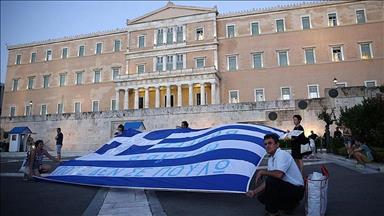
The voting was marred by a physical attack on New Democracy MP Giorgos Koumoutsakos by extreme right-wing protesters demonstrating outside the parliament building.