Melike Pala
19 May 2026•Update: 19 May 2026
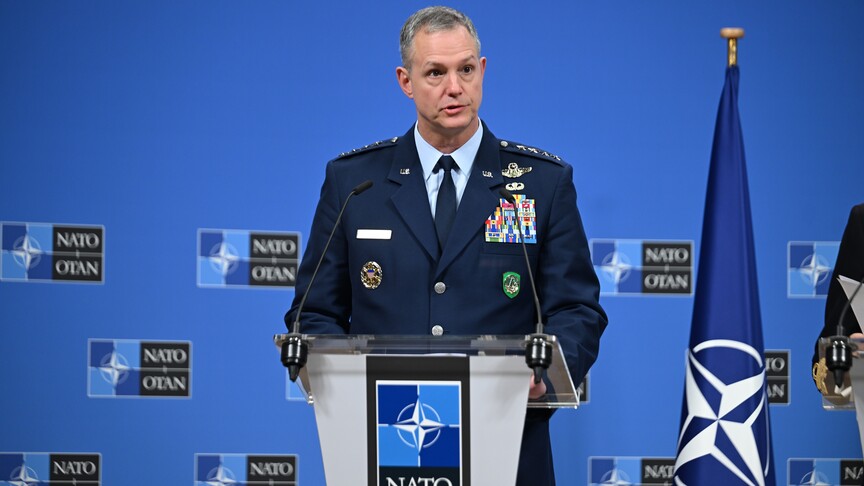
NATO's top military commander in Europe said Tuesday that a stronger European role within the alliance would enable the US to gradually reduce its military presence on the continent.
"As the European pillar of the alliance gets stronger, this allows the US to reduce its presence in Europe and limit itself to providing only those critical capabilities that allies cannot yet provide," Supreme Allied Commander Europe Gen. Alexus Grynkewich told reporters after a NATO Military Committee session of chiefs of defense.
"And so we should expect there to be a redeployment of US forces over time as allies build their capacity," he added.
Grynkewich said any future reductions would be tied to European allies increasing defense spending and meeting capability targets agreed at NATO summits.
He stressed that the process would unfold gradually and in several years rather than according to a fixed timeline.
The comments came as Grynkewich confirmed that 5,000 American troops would be withdrawn from Europe under plans announced by US President Donald Trump, including forces from a rotational armored brigade combat team.
He argued, however, that the move would not affect NATO's ability to implement regional defense plans, noting that European allies have significantly strengthened their conventional military capabilities.
Grynkewich said the strengthened posture allows Washington to shift resources toward "other global priorities."
He added that tensions in the Middle East remain a concern, particularly around maritime security in the Strait of Hormuz.
Grynkewich stressed, however, that any possible NATO role in the Strait of Hormuz would ultimately require political approval by alliance members.
NATO Military Committee Chair Adm. Giuseppe Cavo Dragone also stressed that the alliance faces an increasingly complex security environment, and urged a faster pace in strengthening deterrence and readiness.
"We are not at war, but we are not at peace either. This is why we must redouble our efforts to focus defense investment in accordance with our pledges," he said.
Responding to questions about proposals for a European army, Dragone dismissed that idea, but emphasized complementarity between NATO and the EU.
"We are complementary by design, and we should stick with this, just not just to avoid duplication, waste of money, time, and energies," he said.