Anadolu Ajansı © 2026


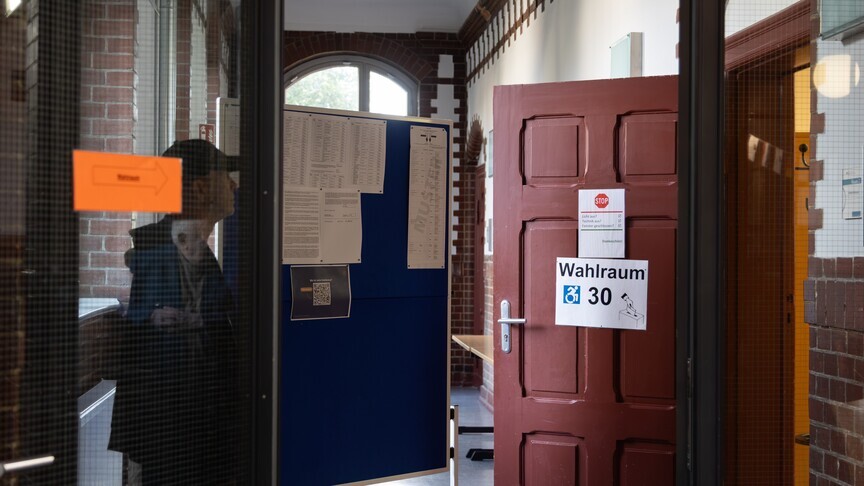
Germany's anti-immigration Alternative for Germany (AfD) party won a second state election Sunday in Mecklenburg-Vorpommern, only two weeks after its record victory in Saxony-Anhalt.
Votes for Chancellor Friedrich Merz’s conservative CDU fell below 5%, with the party failing to enter a German state parliament for the first time.
Carsten Koschmieder, who researches the AfD and right-wing extremism at the Free University of Berlin, said the party is rising nationwide but faster in the east.
He said worsening socio-economic conditions in these eastern states, limited investment and high unemployment all contribute to the trend.
“People in the eastern states are affected by economic uncertainty more than in other parts of the country. They don’t have many savings, and many also feel that they lost almost everything after unification,” Koschmieder said, referring to the reunification of East and West Germany after the fall of the Berlin Wall.
The AfD won 38.2% of the vote in Mecklenburg-Vorpommern, more than doubling its share from 16.7% in 2021, according to preliminary results. Merz’s CDU suffered a heavy defeat, scoring 4.9%—its worst result in a federal state.
Koschmieder said long-standing problems, including a shortage of doctors, strained schools and poor transport links, have been compounded by the economic impact of recent international crises, fueling fear and anger toward Merz.
“People have been very unhappy with Chancellor Merz and his coalition government. Especially in eastern Germany, they think the federal government is not paying attention to their problems, such as unemployment or low pension payments,” he said.
Koschmieder said that while the vote is for state parliaments – and local issues and candidates matter – many voters also want to send a message to Berlin by punishing Merz, a dynamic he said is helping drive the AfD’s surge.
In a representative poll by public broadcaster ARD last week, 90% of respondents in the eastern state of Mecklenburg-Vorpommern said they were dissatisfied with Merz’s federal government.
The AfD’s recent surge in the eastern states also reflects a nationwide trend. While support remains much lower in western states than in the east, the party is now leading nationally.
A GMS survey published last week put the AfD at a record 30% nationwide, 10 points ahead of Merz’s CDU/CSU alliance at 20%, the lowest figure for the conservatives. The center-left Social Democrats (SPD) stood at 11%.
Merz’s coalition with the SPD would miss a majority if a national election were held this week. In the February 2025 federal vote, the CDU/CSU won 28.5% and the AfD 20.8%.
Koschmieder said the latest polls point to a shifting political landscape in Germany. For decades, the center-right CDU and the center-left SPD dominated politics in Berlin and the regions, either through grand coalitions with each other or by governing with smaller parties.
“We now have a new political landscape, with many different parties polling between 5% and 15%,” Koschmieder said.
“It no longer seems realistic for the CDU or the SPD to form two-party coalitions. Three-party coalitions will be more likely,” he added, saying that will make governing more difficult at both the federal and state levels and may lead to more tensions inside coalition governments.
Despite the AfD’s surge nationally and in the east, other mainstream parties have ruled out any cooperation or coalition because of its radical positions and concerns about suspected ties of several leading figures to extremist groups.
However, some conservative politicians have recently begun to argue that this policy should change and that joining the government could pull the AfD toward the center.
Koschmieder said it's unlikely.
“Unlike the other far-right and right-wing populist parties in Europe, the AfD is becoming more radical. The election platform for Saxony-Anhalt was the most radical they had maybe in the last 10 years,” he said.
France’s National Rally leader Marine Le Pen and Italian Prime Minister Giorgia Meloni lead right-wing parties that, at least, try to appear more moderate to win middle-ground voters, he said.
“The AfD is not doing that. But still it is attracting more votes, largely due to the failure of mainstream democratic parties.”
Koschmieder said the AfD’s “remigration” plan targets not only rejected asylum seekers but also Syrian refugees with a legal right to stay and work.
Dennis Hohloch, an AfD lawmaker in Brandenburg, said last month that Germany does not need “80 million” residents and “can also live with 60 million,” a remark critics read as a call for mass deportations that could reach even German passport holders.
Koschmieder also noted that during its Saxony-Anhalt campaign, the AfD advocated easier access to certain weapons permits and opposed using political opinions or a “right-wing extremist” classification as grounds to deny or revoke them.
Germany’s domestic intelligence agency has long monitored the anti-immigration AfD and various members over suspected anti-democratic goals and activities.
In some states, AfD regional branches are classified as a “proven right-wing extremist organization,” with agencies saying parts of the party promote a racist, ethnic understanding of national identity incompatible with the country’s democratic constitutional order.
Despite warnings from security agencies and mainstream party leaders, voters have continued to back the AfD, prompting debate over whether those parties should change their campaign strategy.
Koschmieder said one of the biggest failures of center-right and center-left parties has been their inability to address people’s fears and offer reassurance.
“There’s a lot of transformation going on with globalization and artificial intelligence and all these things. And people are worried,” he said.
“The government should ease the people’s concerns. It should tell them that they are providing a social security network that will support them. They should address skyrocketing rents. That’s the first thing they should do.”
Second, he said, Merz should change his communication strategy. Instead of making promises he cannot keep and offering excuses afterward, he should focus on concrete results and commit only to what he can realistically deliver.
“He’s promising so many things that we all know he cannot keep. That’s a very bad policy and fuels the frustration,” he said.
Koschmieder said another failure is that Merz and his CDU colleagues talk too much about immigration, which is counterproductive and further fuels support for the right-wing AfD.
“If Merz and his conservatives focus on other issues like the economic situation, infrastructure, the housing problem, and offer solutions to these problems, then this will put the AfD into a difficult situation,” he said. “Because the AfD has no answers on these topics.”
news_share_descriptionsubscription_contact

contact_the_ombudsman
is_there_an_error_in_this_story