- Defending El Obeid is strategically important for maintaining civilian life and preserving country's east-west territorial connectivity, says SETA researcher
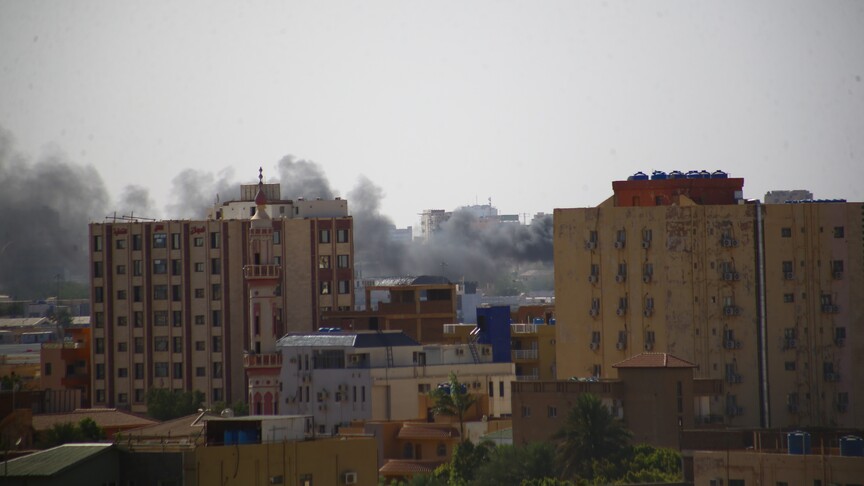
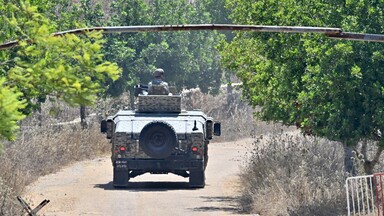
Intensifying clashes around El Obeid, the capital of Sudan's North Kordofan state, are reshaping the military balance in the country's conflict while heightening concerns over a worsening humanitarian crisis, experts said.
They warned that control of El Obeid is critical to preserving Sudan's territorial integrity and that any major military escalation in and around the city could expose hundreds of thousands of civilians to a new humanitarian catastrophe.
Ahmed Abdullah, head of the Mashad Human Rights Organization, and Tunc Demirtas, a researcher at the Foundation for Political, Economic and Social Research (SETA), spoke to Anadolu about the latest developments in Sudan.
RSF targeting civilians through systematic attacks
Demirtas said the military dimension of the conflict should not be overlooked, arguing that the paramilitary Rapid Support Forces (RSF) have carried out systematic attacks against civilians while seeking to weaken the state's institutional capacity.
He said it is essential for the Sudanese Armed Forces (SAF) to halt the RSF's advances, secure strategic areas and restore state authority.
"Without military pressure, it will be extremely difficult to curb the RSF's attacks on civilians, prevent attempts to establish parallel governance structures and protect Sudan's sovereignty," he said.
Demirtas stressed, however, that military gains alone would not be sufficient, noting that the RSF's operational capabilities largely depend on external weapons supplies, financing, logistical support and networks of foreign mercenaries.
As long as such support continues, battlefield gains will remain difficult to sustain, he said, warning that a prolonged conflict could reinforce scenarios of Sudan's de facto partition.
He argued that military efforts should therefore be accompanied by diplomatic initiatives, international backing and sanctions targeting the RSF's external supply networks.
A genuine political solution would only be possible if the RSF's external support channels are significantly restricted, he added.
Fighting expected to shift toward El Obeid
Demirtas said the war has entered a new phase following the battle for El Fasher, with the center of gravity now expected to shift toward the Kordofan region, particularly around El Obeid.
He described El Obeid as more than just a major city, calling it a critical junction for military mobility, logistics and supply routes linking Khartoum with Darfur and southern Sudan.
According to Demirtas, the RSF's strategy extends beyond military targets to include attacks on civilian infrastructure aimed at making cities uninhabitable.
He said power infrastructure, fuel depots and transportation networks have increasingly become targets, adding that future fighting is likely to focus on energy facilities, supply corridors and transport links rather than city centers.
"For the Sudanese army, defending El Obeid is strategically important not only from a military standpoint but also for maintaining civilian life and preserving the country's east-west territorial connectivity," he said.
Arms embargo alone insufficient
Demirtas said sanctions should target the RSF and its support networks rather than the Sudanese state.
He also called for measures against the financial, logistical and commercial networks sustaining the RSF, stressing that strengthening state institutions and building an inclusive political framework would be essential for lasting peace.
Civilians paying highest price
Abdullah said the humanitarian situation across Sudan's conflict zones has reached a critical level, with millions of civilians facing displacement, collapsing public services and severe shortages of food, healthcare and clean water.
Women, children, older people and persons with disabilities are among those hardest hit by the crisis, he said.
"The rule of law and civilian protection mechanisms have largely collapsed in conflict areas. Reports of serious human rights violations continue to emerge," Abdullah said.
"Sudanese civilians are trapped between the warring parties in many parts of the country and are paying the highest price with their lives, dignity, security and future," he added.
Serious violations documented in Darfur
Abdullah said his organization has documented widespread and systematic abuses against civilians in Darfur, including deliberate killings, sexual violence, forced displacement, the burning of villages and displacement camps, and attacks on civilian infrastructure.
He said independent international reports have also found evidence of violations that could amount to war crimes and crimes against humanity.
El Fasher, Zamzam camp, Abu Shouk camp, and parts of North and West Darfur remain among the areas most severely affected, he added.
Abdullah stressed that those responsible for serious violations must be held accountable, saying ending impunity would be essential for any lasting peace.
Risk of new humanitarian disaster in El Obeid
Abdullah warned that civilians in El Obeid face growing risks as military operations expand and humanitarian access remains limited.
He said any escalation could affect hundreds of thousands of civilians, urging all parties to protect civilians and civilian infrastructure and calling on the UN, African Union and the international community to act urgently to prevent a humanitarian catastrophe in North Kordofan.