Baybars Can and Mohammad Sio
17 April 2026•Update: 17 April 2026
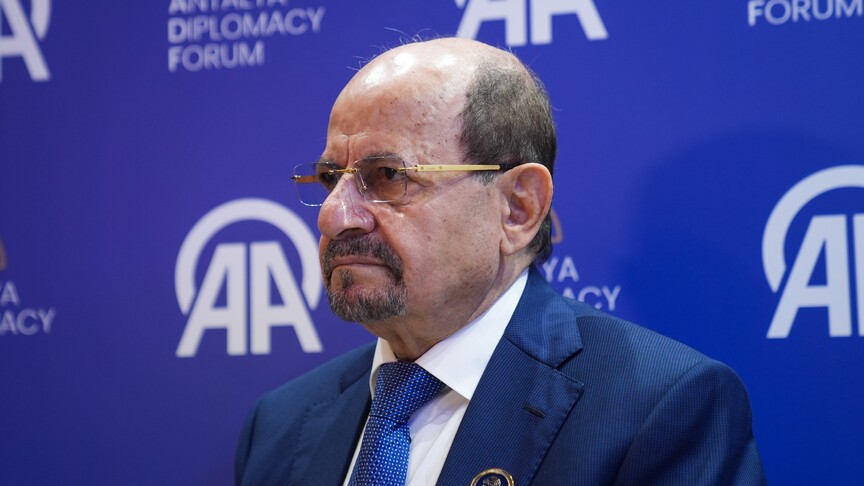
Yemen’s foreign minister warned Friday that a possible control of the strategic Bab al-Mandeb Strait by proxy forces aligned with external powers could pose a threat to global security.
Speaking to Anadolu on the sidelines of the Antalya Diplomacy Forum in Türkiye, Shaya al-Zindani said Yemen’s geostrategic position makes it central to international maritime security.
“Any disruption in the security situation will directly affect regional stability, as well as the safety of international navigation and trade,” he said.
Zindani warned that recent regional tensions have underscored the importance of the Red Sea and Yemen’s position overlooking Bab al-Mandeb, saying it could become “a threat to international peace and security if left to forces acting as proxies for other states.”
He specifically pointed to the Houthis, accusing them of aligning with Iran to threaten maritime routes.
“We have heard that the Iranian regime is recently threatening, after the Strait of Hormuz, to also close Bab al-Mandeb. This indicates they may use the Houthis as a tool to threaten the strait and the Red Sea,” he said.
The top Yemeni diplomat also addressed relations with Türkiye, describing them as “historic and brotherly" and expressing interest in expanding bilateral cooperation across multiple sectors.
“Türkiye has stood by Yemen and its people at various stages, and we are keen to open new areas of cooperation and activate existing agreements,” he added.
The Bab al-Mandeb Strait sits at a critical crossroads between continents, separating Yemen on the Arabian Peninsula from Djibouti and Eritrea in the Horn of Africa.
A route that underpins trade between Europe and Asia, millions of barrels of oil, liquefied natural gas, and container cargo transit the strait each day, making it one of the world’s most sensitive maritime choke points.
In March, Yemen’s Iran-aligned Houthi group signaled that the Red Sea and Bab al-Mandeb could be drawn further into the conflict.
More than 3,300 people have been killed in joint US-Israeli airstrikes on Iran since Feb. 28. A two-week Washington-Tehran ceasefire was mediated by Pakistan, to be effective from April 8.
The US and Iran held rare direct talks in Pakistan on April 11-12 aimed at ending their conflict, but the talks ended without any agreement. US President Donald Trump later announced a naval blockade of the Strait of Hormuz, which took effect at 1400GMT on Monday.