Rania R.a. Abushamala
28 October 2026•Update: 28 October 2026
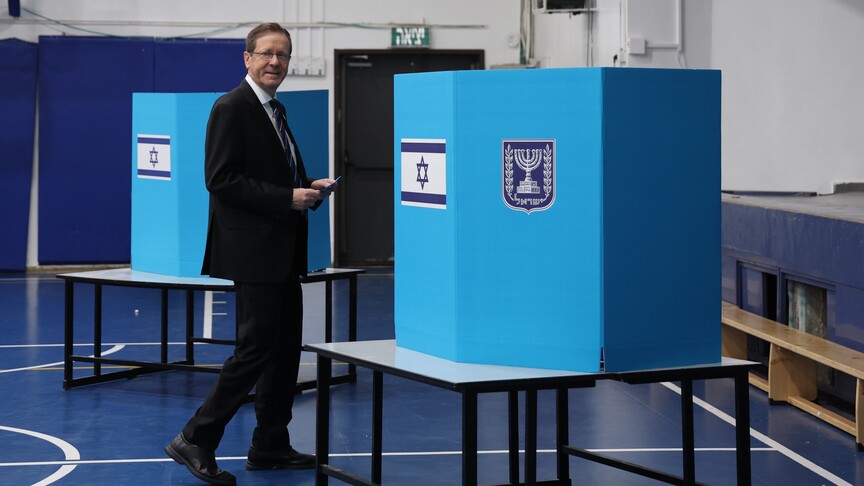
Israeli President Isaac Herzog on Wednesday urged political parties to make every effort to avoid another election after preliminary results left neither main bloc with a parliamentary majority.
“Everything must be done, especially after yesterday, to avoid repeating another election,” Herzog told reporters in remarks carried by Israeli public broadcaster KAN.
He said he would begin consultations with parliamentary factions next week after receiving the official election results from the Central Elections Committee.
“I expect everyone who comes here to come with an open mind,” Herzog said.
He said he would listen to each faction, ask questions and hold discussions before deciding which lawmaker to task with forming a government.
Under Israel's basic law governing government formation, the president must consult parliamentary factions and assign a Knesset member the task of forming a government within seven days of the official publication of election results.
The selected lawmaker receives 28 days to form a government, with the possibility of extensions totaling up to 14 additional days.
If the first candidate fails, the president may appoint another lawmaker. At a later stage, at least 61 lawmakers can nominate a candidate to form a government.
Failure to establish a government could ultimately trigger another election.
Although coalitions generally seek support from at least 61 lawmakers, Israeli law allows minority governments to take office if more lawmakers vote in favor than against in a parliamentary confidence vote.
Until a new government wins the Knesset's confidence and takes office, Netanyahu's outgoing government will continue performing its duties.
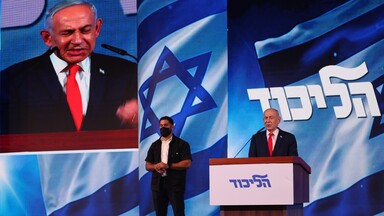
According to Israeli Channel 12, Prime Minister Benjamin Netanyahu's bloc was projected to win 53 seats in the 120-member Knesset after all regular ballots were counted Wednesday.
The opposition bloc led by Gadi Eisenkot was projected to secure 48 seats, while predominantly Arab parties were expected to win 19 seats, the broadcaster reported.
More than 500,000 special ballots remained to be counted.
Neither main bloc has been projected to reach the 61 seats needed for a parliamentary majority.