Mohammad Sio
25 September 2026•Update: 26 September 2026
Lebanese Prime Minister Nawaf Salam said on Friday that the June framework agreement signed with Israel must be translated into practical steps under a clear timetable, including the completion of Israel's withdrawal from Lebanese territory.
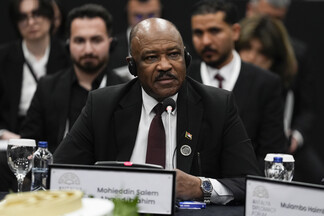
Addressing the 81st session of the UN General Assembly in New York, Salam said the success of any agreement should be measured by the implementation of its commitments rather than declared intentions.
"What is required today is to complete the translation of this agreement into practical steps within a clear timetable and a verification mechanism that guarantees the implementation of all its provisions," he said.
Salam reiterated Lebanon's demand for Israel to withdraw from all Lebanese territory up to the country's internationally recognized borders, as well as for the release of Lebanese prisoners and the safe and dignified return of residents to their towns and villages.
He also called for the reconstruction of areas destroyed during the war.
The framework agreement, signed in Washington on June 26, provides for a gradual Israeli withdrawal from Lebanese territory, beginning with two pilot areas in southern Lebanon, alongside the deployment of the Lebanese army and the disarmament of armed groups outside state control, including Hezbollah.
Turning to the wider region, Salam said there could be no lasting stability as long as Palestinians remained unable to exercise their right to self-determination.
He renewed Lebanon's call for expanding the UN Security Council to make its representation more inclusive and equitable, while proposing restrictions on the use of the veto.
"We do not call for abolishing the veto power within it; rather, we call for changing how it is used -- specifically when it comes to genocide, war crimes, crimes against humanity, and grave violations of international law itself," he said.
Salam said his government had taken office facing three major challenges: restoring public confidence following Lebanon’s financial collapse and the Beirut port blast; restoring the state’s exclusive authority over decisions of war and peace and weapons; and recovering all Lebanese territory from Israeli occupation.
He said Lebanon had moved beyond simply declaring that weapons should be restricted to the state, citing Cabinet decisions taken in August and September last year and again in March this year.
“No one speaks on behalf of Lebanon, and no one negotiates on its behalf except the Lebanese state through its constitutional institutions,” said Salam.
He acknowledged that Lebanon is affected by developments in the region, but that Beirut will not accept the country becoming “an arena for the conflicts of others” or a bargaining chip in negotiations conducted without it.
Salam said Lebanon’s security and stability must not become the price of settlements reached in its absence.
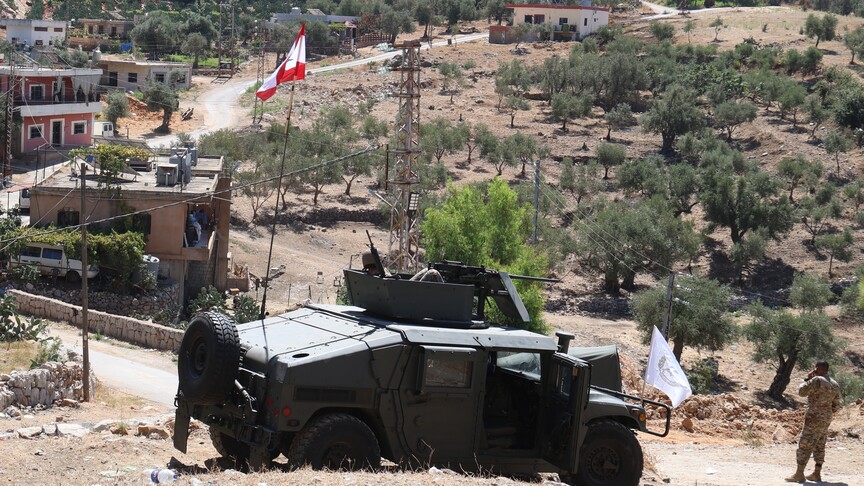
Despite signing the framework, Israel continues to carry out attacks on southern Lebanon and still occupies areas in the south, some of which it has occupied for decades and others of which were seized during recent wars and military operations.
The Israeli offensive in Lebanon has killed at least 4,386 people, wounded 12,407 and displaced more than 1 million others since early March, according to Lebanese authorities.