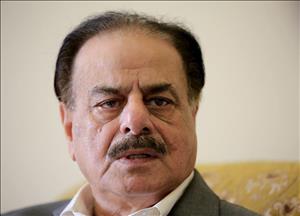
The author is a geostrategic analyst and freelance columnist on international affairs.
ISTANBUL
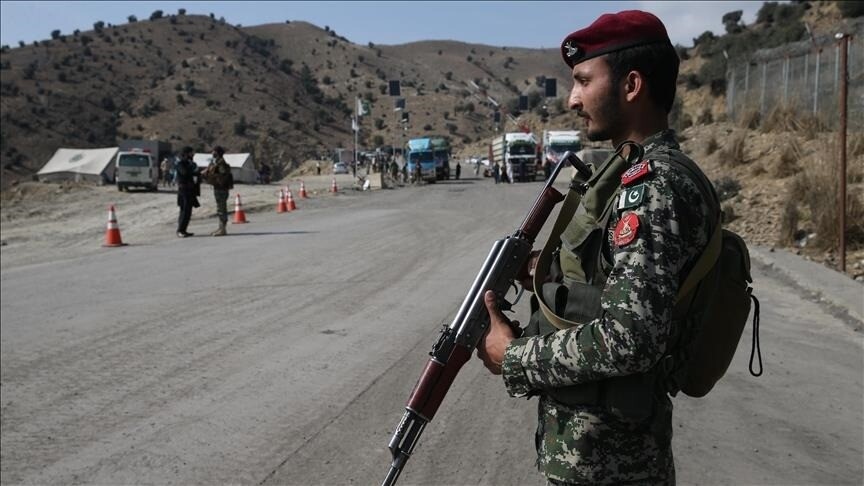
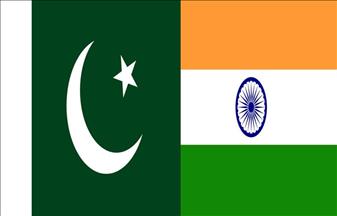
The situation over the Hindu Kush took a definitive turn in early 2026 as the long-simmering tensions between Islamabad and the Afghan government transitioned from border skirmishes to what many now describe as an "open war." The launch of Operation Ghazab Lil-Haq in late February, followed by the high-intensity strikes of March, has signaled the final collapse of the decades-old Pakistani doctrine of "strategic depth." However, as the smoke clears over sites like the former Bagram Airbase and various border outposts, a more complex question emerges: is this conflict a spontaneous eruption of local grievances, or a meticulously engineered confrontation designed to serve broader geopolitical interests?
A central question in this conflict is the role of the China-Pakistan Economic Corridor (CPEC) [1]. For Beijing, the stability of Pakistan's western border is not merely a bilateral concern but a strategic imperative for the Belt and Road Initiative (BRI). On March 17, 2026, Chinese officials [2] reportedly emphasized that regional peace is a non-negotiable prerequisite for the planned extension of CPEC infrastructure into Afghanistan.
Analysts argue that the current instability serves as a strategic "chokepoint" intended to raise the security premium for Chinese investments. By forcing Islamabad to divert massive military and financial resources to its western flank, external architects may be seeking to undermine the economic viability of the corridor. Several geostrategy experts claim that the double-sanctuary policy [3] -- where the Afghan government allegedly facilitates both the Tehreek-e-Taliban Pakistan (TTP) and the Balochistan Liberation Army (BLA) -- a claim which it has denied -- is a calculated tool. This policy allows militant groups to coordinate strikes on CPEC infrastructure from the safety of Afghan soil, creating a zone of lawlessness that threatens to sever the region from Beijing's trade ambitions.
The Kabul-New Delhi axis and the second front
A significant variable in this "engineered" architecture is the evolving relationship between Afghanistan and India. While New Delhi maintains that its presence in Kabul is restricted to "technical missions" and humanitarian aid, Islamabad remains deeply skeptical. The recent institutionalization of a Joint Chamber of Commerce [4] between the two nations is seen by some critics as a conduit for more than just commerce.
Evidence suggests that this rapprochement provides the Afghan government with the diplomatic leverage required to resist Pakistan's counter-terrorism demands. From Islamabad's perspective, the creation of a "second front" on its western border is a classic geopolitical maneuver. Whether this is a genuine pursuit of national interest by Kabul or a coordinated strategy by regional intelligence services to keep Pakistan off-balance remains hotly contested. However, the timing of Afghanistan's increased defiance -- coinciding with enhanced "technical" cooperation with external powers -- has not gone unnoticed by regional observers.
The information war has been as intense as the kinetic one. Following the mid-March airstrikes, the Afghan government claimed that [5] Pakistani forces had targeted a drug rehabilitation center, resulting in civilian casualties. This narrative was quickly framed as a humanitarian atrocity to stir international condemnation. Conversely, the Pakistani military [6] argued that the site was a sophisticated camouflage for TTP ordnance and drone storage.
Independent verifiers from UNAMA [7] have noted the difficulty in navigating this propaganda battlefield. Pakistani officials have countered the Afghan claims by releasing satellite imagery of neutralized militant hubs, suggesting that networks aligned with the Afghan government are employing new forms of psychological warfare, likely guided by external technical advisors who have recently flooded into Kabul.
The human cost and Islamabad's breaking point
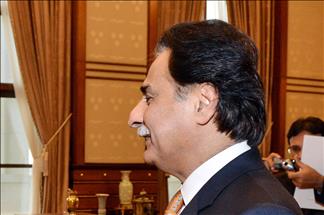
The catalyst for Pakistan's "fury" remains the unbearable human cost of 2025 -- the deadliest year for the country in a decade. With over 1,200 casualties, the trail of blood led directly back to safe havens on Afghan soil. After years of hollow assurances from the Afghan leadership, Islamabad has shifted to a policy of "unconditional demand." Khawaja Asif [8], Pakistan's minister of defense, has stated that military pressure will not cease until there is a verifiable end to the TTP's presence on Afghan soil.
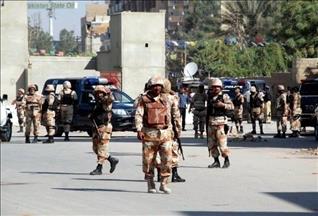
Following a brief, five-day Eid al-Fitr ceasefire [9] brokered by Qatar and Saudi Arabia, hostilities officially resumed on March 26. As of March 31, 2026, the military stance remains aggressive. Reports indicate that over 700 people have been killed or injured since the start of the campaign.
As the region stands at a crossroads, the structural changes appear permanent. Pakistan has demonstrated the political will to protect its western flank, proving that the myth of "strategic depth" has been replaced by a pragmatic necessity for border integrity. However, the shadow of the "engineered war" looms large. As Beijing [10] continues to offer mediation, the ultimate goal remains a stable Eurasian trade bloc.
The "Hormuz of the Land" -- the transit routes through Pakistan and Afghanistan -- must either be secured by the states themselves or remain a playground for those who benefit from a fractured Silk Road.
[1] China-Pakistan Economic Corridor: https://www.cpec.gov.pk/
[2] Chinese officials (CPEC and Regional Peace): http://www.news.cn/english/20260317/c_131051829.htm
[3] Double-sanctuary policy (Strategic Analysis): https://www.idsa.in/issuebrief/ttp-and-the-taliban-0326
[4] Joint Chamber of Commerce (India-Afghanistan Trade): https://www.mea.gov.in/press-releases.htm?dtl/37654/India_Afghanistan_Trade_Update
[5] Taliban (Official Press Release): https://www.bakhtarnews.af/en/category/politics/
[6] Pakistani military (ISPR Statements): https://ispr.gov.pk/press-releases.php
[7] UNAMA (Statement on Hostilities): https://unama.unmissions.org/unama-statement-border-hostilities
[8] Khawaja Asif (Ministry of Defense): https://mod.gov.pk/NewsDetail/
[9] Eid al-Fitr ceasefire (Mediation Update): https://www.spa.gov.sa/en/saudi-qatar-mediation-afghanistan
[10] Beijing (MFA Mediation Offer): https://www.fmprc.gov.cn/mfa_eng/zxxx_662805/202603/t20260310_11243512.html
*Opinions expressed in this article are the author's own and do not necessarily reflect Anadolu's editorial policy.