By Shadi Khan Saif
KABUL
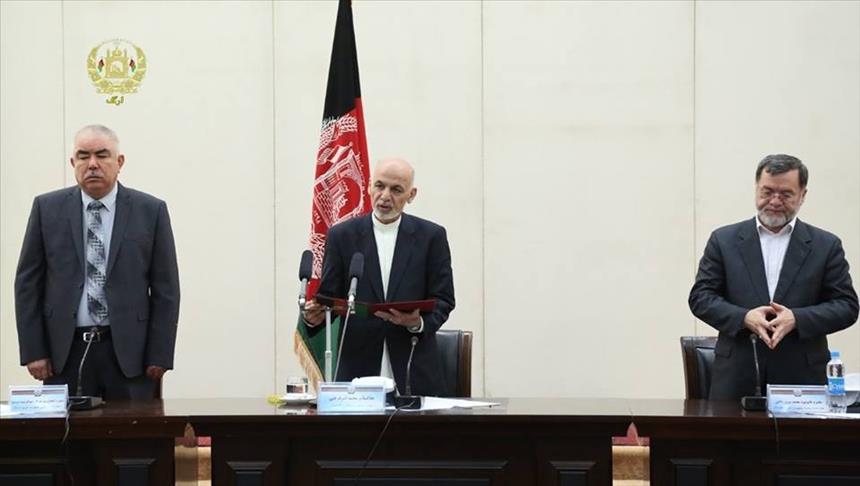
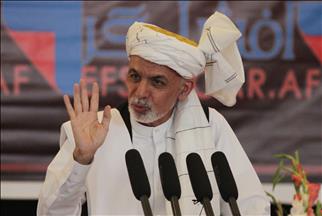
Following a rather delayed formation of his cabinet, Afghan President Mohammad Ashraf Ghani has tasked his ministers to come up with strategies for swift reform that promise so much that many doubt whether they can deliver.
In line with directives by the president, five cabinet ministers have presented ambitious projects to be implemented within their first 100 days in office.
Justice Minister Abdul Basir Anwar announced on Sunday a four-pronged approach covering the judiciary, legal services, administration and matters related to under-aged prisoners.
The newly-minted minister promised to pitch at least 20 amendments to existing laws to ensure transparency, equity and better service delivery in various departments.
In his strategy, Minister Anwar termed encroachment of public land and rampant corruption as two major challenges.
The new Minister for Agriculture, Irrigation & Livestock Assadullah Zamir, was similarly hopeful when he spoke about setting up 13 new irrigation centers across the country, cultivating some 3,500 new gardens and 95 greenhouses, putting in place mobile labs for farmers in case of disasters and planting new pistachio and pine tree forests.
“I have devised this plan keeping the challenges and needs in mind,” he said.
“God willing, within 100 days I will implement this plan.”
The ministers are setting high standards, at least on paper, but the implementation might just not be as easy, political commentator Nasrullah Stanikzai told Anadolu Agency.
“For some ministries, 100-days are just too little to plan for,” he said.
“For instance, no new structures and broader changes can be brought in this just little over three months of time,” Stanikzai said.
Remaining optimistic however, he noted that the president, with his knowledge and experience, can get the best out of this if the plans were executed without too much interference.
Earlier in the week, 100-day plans were announced by other ministries as well.
On his part, Humayou Rasa, Minister for Trade and Commerce, said his ministry would try to develop dry ports in the country in collaboration with the international community and neighboring countries.
He warned that the country would become entirely import dependent if serious attention was not paid to the worsening trade deficit.
“Our imports are at least 20 times more than exports. That means if we bring a U.S. dollar into the country against our exports, 20 dollars go out against the goods and services we import,” he said.
Economic analysts think it would be a daunting task to lift the economy under current circumstances, when the aid money is shrinking and capital is flying away due to lack of security.
“I am not very confident that the ministry would succeed in implementing its plans in the true spirit,” analyst Saifuddin Saihoon told Anadolu Agency.
The Minister for Information Technology and Broadcasting has pledged to provide easy and better internet access to the university students as part of the ministry’s 100-day plan.
Minister Abdul Razaq Waheedi announced the plan on Thursday, saying that it was among his top priorities to devise a comprehensive strategy for expanding the fiber optic network for fast internet access across the country.
The minister touched upon paving the way for e-governance, and encouraging the private sector in the fields of information and technology as part of his agenda.
Faiz Mohammad Usmani, Minister for Hajj and Religious Affairs, underlined the need to regulate state-owned mosques and streamline Friday sermons so that the true messages of Islam reach as many devout Muslims as possible.
The minister stressed the need to keep close contact with prayer leaders on a regular basis, especially regarding topic selection for Friday sermons.
Accountability question
It took President Ghani and his power sharing CEO Abdullah Abdullah over eight months to form a cabinet that still lacks a minister for defense.
Ghafoor Liwal, an independent analyst, feels that the fault lines between the two leaders still exist, which was something that could easily undermine the potential of this whole strategy.
“This whole practice sounds very good on paper and in words but when it comes to the implementation we know for sure that many ministers -- despite being professionals at their work -- have loyalties to their backers rather than the president, so the whole idea of accountability is lost,” he said.
Liwal noted that if applied in true spirit, the concept of 100-day plans would do wonders in terms of productivity and service delivery.
“No doubt that this government has inherited enormous security and economic problems from the past but they can only overcome them if they stop creating more troubles for themselves and get over with the political differences and petty issues,” the analyst added.