Aysu Bicer
30 October 2026•Update: 30 October 2026
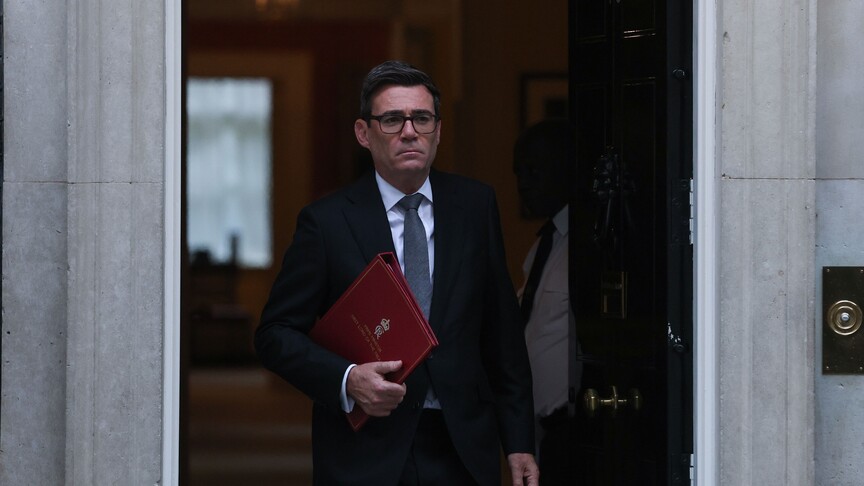
British Prime Minister Andy Burnham has called for coordinated devolution across all parts of the UK, warning that no nation should be left behind as England moves ahead with plans to transfer more powers to regional authorities.
Speaking to journalists after this morning's devolution summit, Burnham expressed disappointment over the absence of Northern Ireland's First Minister and Deputy First Minister, saying discussions with Stormont would continue.
"Well, obviously, it's disappointing that the first minister and deputy first minister of Northern Ireland weren't here," he said.
"There was some representation, but we will continue the discussions too with Stormont about how do we take forward the same ideas, the same arrangements to get power down into all parts of the UK."
The summit comes amid growing political tensions, with Scotland, Wales and Northern Ireland currently led by first ministers from nationalist parties that support independence from the UK.
'It's really important that we all move at the same pace together'
Burnham said the devolution agenda was progressing quickly in England, pointing to further measures announced in the budget aimed at expanding regional devolution.
"I don't want to see Scotland left behind. I don't want to see Wales left behind, but also crucially, I don't want to see Northern Ireland left behind," he said.
He stressed the importance of all parts of the UK progressing together, adding: "So it's really important that we all move at the same pace together. And I won’t allow anything to delay that. Growth can't wait. People need to see improvements in employment and in living standards in all parts of the UK."
On the possibility of additional powers for devolved governments, Burnham said discussions at the summit focused on reindustrialization and employment support.
He said one area under consideration was the devolution of innovation funding to the regional level, with Scotland and Wales expected to determine how the arrangements would work in their respective countries.
"It's about creating those structures at a regional level, and that's a matter for Scotland and Wales to decide what that looks like in both countries," he said.
Burnham added that the UK and devolved governments could work jointly to support regional structures and advance reindustrialization through greater devolution of innovation funding.
The second area of discussion focused on employment support, particularly measures aimed at young people.
"There are too many young people out of work here in Scotland, in Wales, and in England too," Burnham said.
He called for employment support to be localized as much as possible to help young people return to work, describing the issue as a significant challenge facing the UK.
Burnham said further discussions following the meeting of the National Economic Council would examine arrangements for transferring additional employment support powers to Scotland and Wales, with a particular focus on young people.