BENGHAZI, Libya
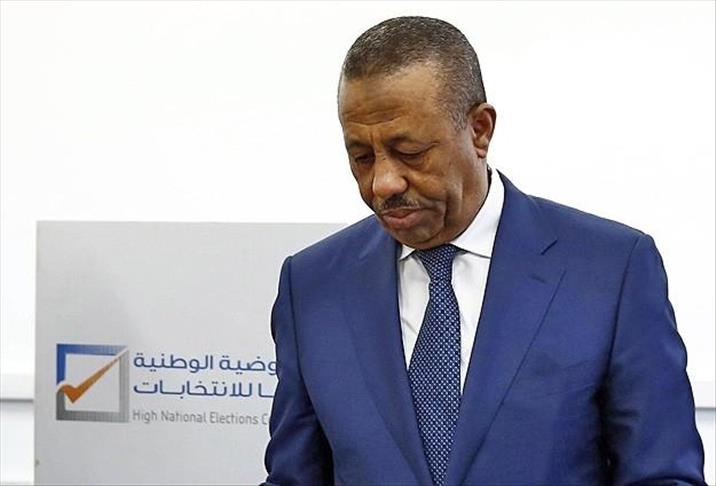
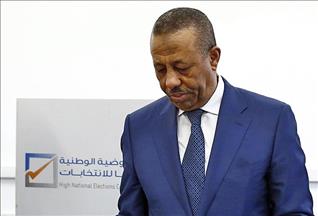
Abdullah al-Thinni, prime minister of Libya’s Tobruk-based government, announced his intention to resign Tuesday night on live television after facing a barrage of public criticism.
During a live interview on a Libyan television channel, al-Thinni – whose government has recently come under fire for failing to provide adequate public services – said he would formally submit his resignation to the Tobruk-based parliament on Sunday.
It remains unclear, however, whether he will actually carry through with the move.
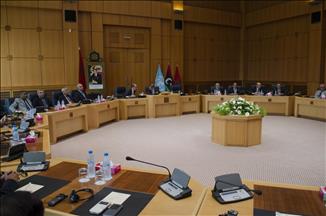
Notably, al-Thinni’s assertions came only one day after Libya’s rival administrations – the Tobruk-based House of Representatives and the Tripoli-based General National Congress (GNC) – resumed UN-backed peace talks.
The talks, which kicked off in Geneva late Tuesday, were attended by a GNC delegation that included GNC Deputy President Saleh al-Mahsun.
The GNC had boycotted an earlier round of negotiations held last month in Moroccan capital Rabat.
Upon the resumption of talks, UN officials stressed the need for a “unity government” comprised of elements from both camps.
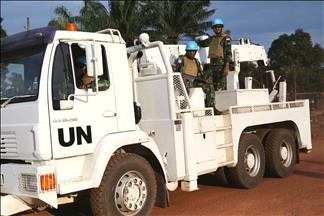
“We are starting a new round of talks with a very clear agenda,” Bernardino Leon, head of the UN Support Mission in Libya, told reporters.
“We will work in the coming days on the basis of a timetable, which must necessarily be short. Libya is facing huge challenges,” Leon said, going on to urge both sides to agree on the terms of a unity government by the end of August.
He went on to warn of “deeper chaos and division” in Libya if the two sides failed to reach agreement.
Libya has remained in turmoil since a bloody uprising ended the decades-long rule of strongman Muammar Gaddafi in late 2011.
Since then, the country's stark political divisions have yielded two rival seats of government – one in the eastern city of Tobruk and the other in capital Tripoli – each of which boasts its own institutions and military capacities.