By Ainur Rohmah
JAKARTA
A human rights group announced Friday it would refer Indonesia to the United Nations over its use of the death penalty.
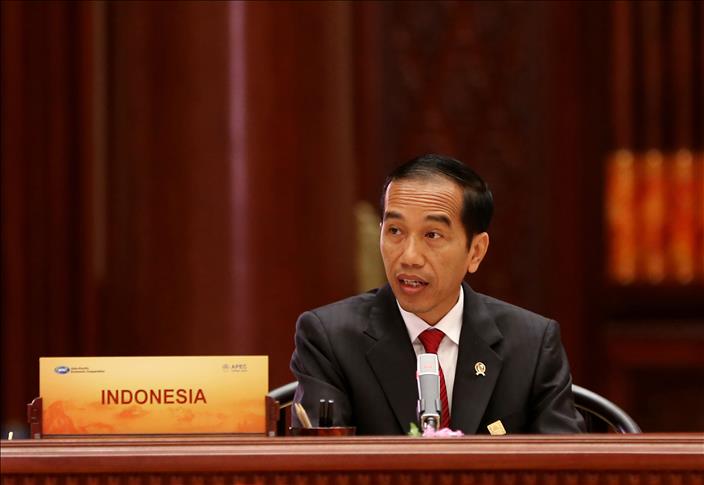
Haris Azhar, coordinator of the Commission for Missing Persons and Victims of Violence, known as Kontras, told The Anadolu Agency he would report President Joko Widodo to the UN and provide information on the implementation of executions next month.
"We object to the way the government is carrying out the death sentence,” Azhar said, adding that although the UN has no authority to demand Indonesia revokes the policy, he hoped it would provide guidance on non-fatal punishments.
The development came after Widodo declined to grant clemency in five death sentences due to be carried out.
Earlier this month, the government announced that it would execute two men convicted of murder and three sentenced for drugs offenses. All the convicted men are Indonesian.
This week Human Rights Watch called on Widodo cancel the executions by firing squad.
Phelim Kine, the group’s deputy director for Asia, said: “President Widodo should join the global tide toward abolishing the death penalty rather than approving multiple executions.”
He added: “President Widodo should recognize that the death penalty is a barbaric punishment, not a crime deterrent. If Widodo is serious about making Indonesia a regional model of a modern, rights-respecting democratic state, he should start by joining the countries that have abolished capital punishment.”
Criticizing Widodo’s refusal to intervene in the death cases, Azhar said the decision demonstrated that the president “doesn’t understand the enforcement of human rights.”
He pointed out that the use of the death penalty against drug dealers had failed to address Indonesia’s rising drug problem.
According to the Attorney General’s office, there are 136 people currently on death row in Indonesia – 64 convicted of drug trafficking, two for terrorism and the remainder for murder and robbery.
The Kompas.com news website quoted Widodo in a college lecture in Yogyakarta on Dec.9 in which he said: “I will reject all requests for clemency submitted by death row inmates.”
He said drugs "destroyed the future of the nation" and defended the death penalty as an "important shock therapy" for anyone violating Indonesia's drug laws.
Indonesia ended a four-year unofficial moratorium on the use of the death penalty in March 2013 when it executed Adami Wilson, a 48-year-old Malawian national convicted of smuggling a kilogram of heroin into Indonesia.
Sumirat Dwiyanto, head of public relations for the National Narcotics Agency, said the death penalty for drug cases had been subject to a judicial review in 2007.
He told AA: “There are a lot of people who don't agree with the death penalty. But this penalty has been through judicial review in the constitutional court and it is still valid… It does not violate human rights or laws.”
The agency claims around 4 million Indonesians use drugs and around 30 die every day due to drug use.
Dwiyanto added: "Each country has its own sovereignty to apply the law.”
www.aa.com.tr/en