Yuksel Serdar Oguz
18 June 2015•Update: 19 February 2017
WASHINGTON, D.C.
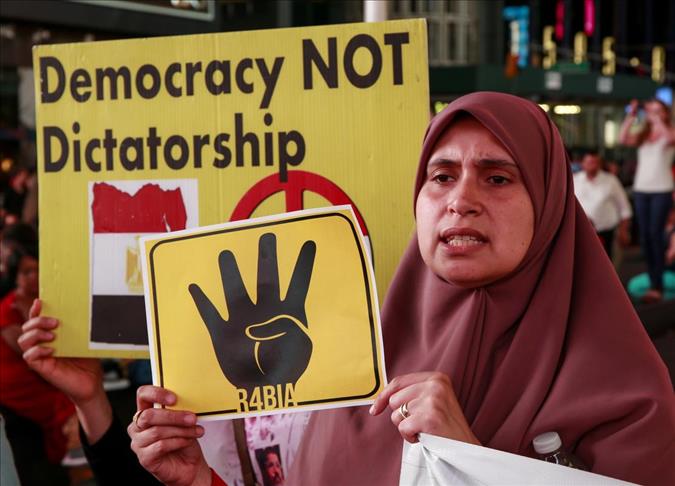
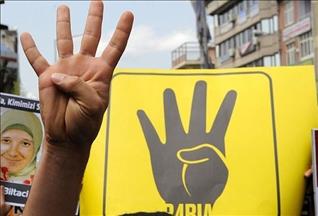
Muslim organizations in the U.S. have strongly condemned the Egyptian military-led regime’s decision to give death sentences to Egypt's first democratically-elected president Mohammed Morsi and other leaders of the Muslim Brotherhood.
The U.S. Council of Muslim Organizations (USCMO), a coalition of national and local Muslim organizations in America, questioned why the U.S. administration continued to work with an Egyptian regime that violates principles of democracy and human rights.
The Egyptian court's decision is "a grave concern to American Muslims, to see American dollars goes to a country that was supposed to uphold democracy and protect human rights and what we see is the regime continues to receive U.S. dollars in assistance while there is no improvement and no return to democracy," USCMO Secretary-General Oussama Jammal told Anadolu Agency.
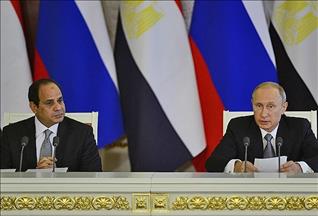
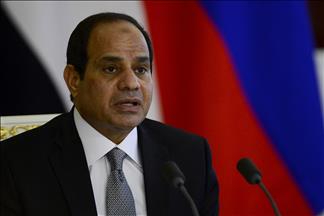
About the current Egyptian President, Abdel-Fattah el-Sisi, led regime, Jammal said: "I can't even call it a government because it has not met the basic democratic qualifications."
"It is ironic that former president of Egypt [Hosni Mubarak] has been vindicated and left without any charges whereas the only president who was elected directly by the people in the history of Egypt [Morsi] would be sentenced to death for something that is absolutely absurd," he added.
Dr. Zahid Bukhari, executive director of the Center for Islam and Public Policy, alleged that the Egyptian court’s decision against Morsi was politically motivated.
"If you listen to judges in the case, you would be able to tell that this is not a trial, this is not a judicial court decision. It was a political statement read by some sort of so-called judge," Bukhari alleged.
On Tuesday, former Egyptian president Mohamed Morsi was sentenced on charges of espionage as well as on charges related to a mass jailbreak incident in 2011 during demonstrations that removed leader Hosni Mubarak. Apart from the death penalty, Morsi was also given a life sentence.
The Egyptian court had also sentenced five Muslim Brotherhood leaders, including the group’s head, Mohamed Badie, to death for participating in the jailbreak.
Ninety-four other co-defendants were also sentenced to the gallows, in absentia, on similar charges, including prominent Muslim scholar Yusuf al-Qaradawi.
Morsi, Egypt's first-ever democratically elected president, was ousted by the military in a 2013 -- after only one year in office -- following protests against his presidency.
Since Morsi's ouster, Egyptian authorities have launched a relentless crackdown on dissent that has largely targeted Morsi supporters, leaving hundreds dead and thousands behind bars.