Anadolu staff
23 July 2026•Update: 23 July 2026
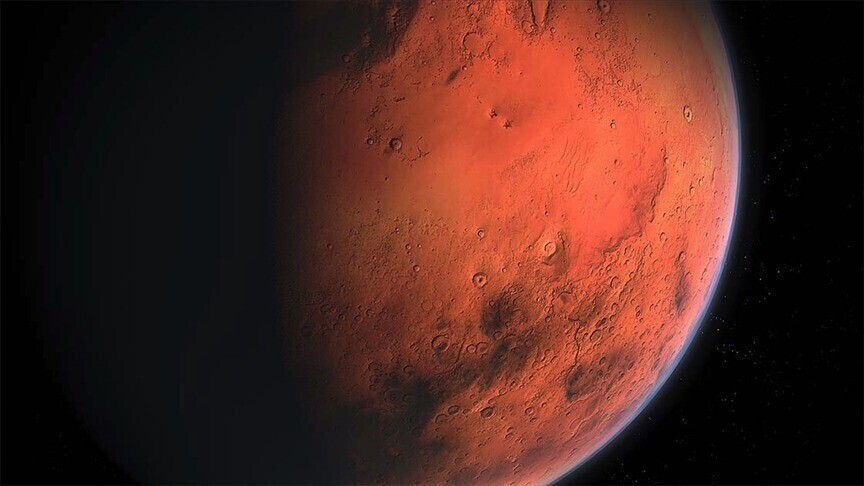
Researchers have uncovered evidence that ancient Mars once hosted vast underground magma systems similar to those on Earth, challenging the long-held view that the Red Planet's interior was relatively simple.
The study, published in the journal Nature Astronomy last month, analyzed seismic data collected by NASA's InSight lander from marsquakes and meteorite impacts.
Scientists identified a boundary about 24 kilometers (15 miles) beneath the surface that appears to separate silica-rich rocks from deeper iron- and magnesium-rich rocks, suggesting magma once accumulated and evolved deep within the Martian crust.
The researchers say the findings indicate Mars may have sustained large, interconnected magma systems rather than isolated volcanoes, despite lacking the moving tectonic plates that shape Earth's geology.
Similar processes on Earth are linked to the formation of continents and the recycling of crustal material.
The team said the discovery suggests complex crusts can develop on rocky planets without plate tectonics, raising the possibility that conditions favorable to habitability may be more common in the universe than previously thought.
The research was led primarily by the University of Oxford's Department of Earth Sciences in collaboration with the University of Bristol.