By Andrew Jay Rosenbaum and Feyza Susal
ANKARA
“Eid al-Fitr is always good for us, why should this year be different?” asks Bayram, who works behind the counter at the Erzincan Mandira grocery in Umitkoy, Ankara.
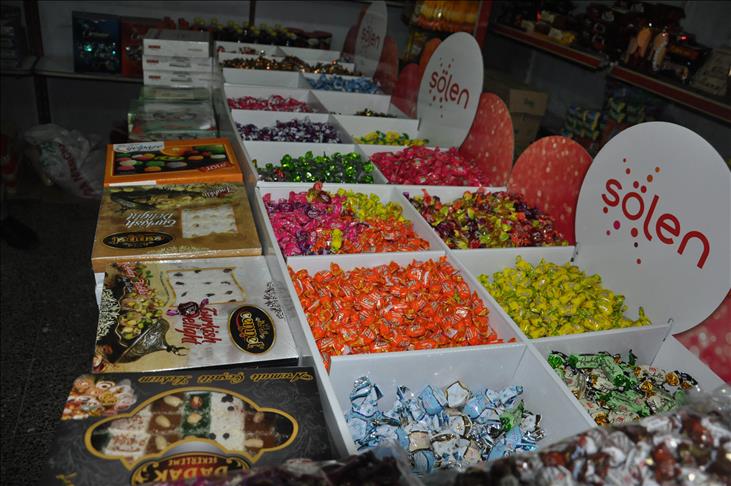
The three-day festival, which takes place at the end of Ramadan, usually gives retailers a big boost as Turks purchase large amounts of candy and gifts for visits to relatives.
Analysts interviewed by Anadolu Agency said that this year will be slightly different, as the political context is expected to dampen sales.
“Consumers may spend a bit less this year, as they are concerned about the formation of a new government in Turkey. As negotiations continue – the Justice and Development Party, which received 41 percent of the vote, is attempting to form a coalition."
“Consumers are jittery. In this context, consumers tend to save money rather than spend it,” says Unsal Ban, a professor of economics at THK University in Istanbul.
But consumers will increase spending to a certain degree, Ban added.
Consumers start early, spend in stores and online
Sales made via computer and mobile phone see an important jump just ahead of and during the end-of-Ramadan festival, according to analysts at the Criteo consultancy.
“Just before those three days, consumers still purchase. The share of mobile sales is 29 percent up during the final week of fasting. And during the feast days, while people tend to stay away from their computers, they still have their phones in their pockets – and they use them to make purchases,” Criteo analysts tell Anadolu Agency.
“There will be somewhat fewer people travelling to visit other family members this year, though holiday feasts are always popular. Of course, tourism is always at the top level during this holiday,” commented Ray Gaul, an expert on Middle Eastern retailing at the Kantar Retail consultancy.
“Turkish consumers actually begin preparing for the holiday in June, which is when retailers see the largest spike in food purchases. But, during the holiday itself, there is a sharp jump in non-food purchases,” Gaul explained.
This is because Turkish consumers tend to make important financial decisions during the festival at the end of Ramadan, Gaul said.
“This is the time when Turkish consumers decide to remodel the house, perhaps buy new furniture,” Gaul adds.
Bendevi Palandoken, president of the Confederation of Turkish Tradesmen and Craftsmen, agrees that consumer spending would be steady this year.
“During the Ramadan festival, you can feel the market dynamism,” Palandoken said. He forecast a 30 percent increase in retail spending during the holiday. “Tradesmen also see a sharp jump in sales during this time,” he added.
Nothing is more important to a consumer during the Ramadan festival than buying candy and chocolate, as this makes the end to the fasting during Ramadan that much sweeter.
Palandoken noted that a wide variety of sweets are available for the festival, with a price range making candy accessible to every consumer.
“Annually, in the Ramadan festival, the size of the candy sector climbs to 500 million Turkish liras ($185.7 million), and the tonnage size reaches 40,000-45,000, the highest amount in the year,” he estimated.
Nestle Turkey sees gifting chocolate consumption increase especially in these periods. DAMAK, which is an 80-year-old local brand of Nestle, has a special place during the Ramadan feast time.
“With the flagship position of DAMAK, 60 percent of our gifting sales are realized in the Ramadan feast time and the rest is in Kurban Bayram,” commented Oben Akyol at Nestle Turkey chocolate business executive manager..
But consumers may be somewhat daunted by higher prices this year. “Food prices are the headline item in Turkish inflation,” commented Attila Yesilada, an economist with Global Source Partners in Istanbul.
“Chocolate prices, in particular, are about 40 percent higher than usual. This may sour consumers on candy purchases to some extent, but enthusiasm for feasting with relatives may overcome considerations of thrift in this period,” he said.
Rise in travel
Many consumers travel to visit relatives during the Ramadan festival. Criteo said that travel purchases climb by 57 percent during the early days of Ramadan, decline until the last three days and then jump again.
But more consumers will stay home this year, according to Palandoken, and those that do not travel will also purchase less.
“On the other hand, those who do travel spend more, and they tend to spend it at their destination. So retail sales see a more important spike in the provinces than in the major metropolitan areas,” he said.
Some retailers get an additional advantage ahead of Ramadan, however. “Many consumers decide to fix up their homes and improve gardens ahead of the Ramadan festival, because they want to impress visiting relatives,” Gaul said.
As a result, do-it-yourself stores and garden centers also see a particularly sharp rise in sales in May and June, Gaul explains.
Ramadan, and the festival, are happy times in Turkey and consumers particularly enjoy the festival – all of this makes retailers especially happy.
“It’s a really nice holiday,” Bayram, of Erzincan Mandira, said.