by Hatice Kesgin
ANKARA
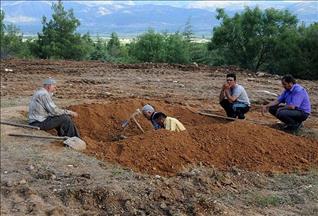
Four top Gambian police officials have been trained by the Turkish Police Department of Criminal Research and Technical Investigations in their patented crime scene investigation program. The police officials aim to transfer the program to Gambia.
The four top Gambian police officials, including a Gambian superintendent, were trained for almost seven months in different Turkish provinces and are close to completing the program in the capital, Ankara.
"We learned many skills and we will implement them when we go back home," Gambian superintendent Fakebba Darboe, 45, said to an Anadolu Agency reporter.
Darboe was worried, however, that he would not be able to use many of the techniques he learned in Turkey due to a lack of equipment back home.
Gambia has a population of approximately 1.5 million. There are at least 6,000 police officers in the country, Darboe said.
A young sergeant, Sheriff Barrow, 28, did not know that Turkey owned the patent to one of the world's most important finger print systems.
“Using Turkey’s AFIS fingerprint system was a dream for us because when back home, we are not able to use this technique,” Barrow said.
The Automatic Palm and Fingerprint Investigation System converts manually-taken finger prints to digital images via optical scanners and records these images in its database.
Turkey has been using the AFIS fingerprint system since 1998.
Cem Mehmet Cetin, a deputy in the department of criminal research and technical investigations, explains that by using the AFIS system, Turkish security can have easy access to more than 27 million fingerprints within a few minutes via the county’s database in order to carry out faster and safer finger print comparisons.
“Turkey’s Department of Criminal Research and Technical Investigations, or KATEM, provides training in forensic and crime scene investigation,” Cetin stressed.
According to bilateral training agreements between Turkey and other countries, Turkish security services give courses and training to foreign police organizations.
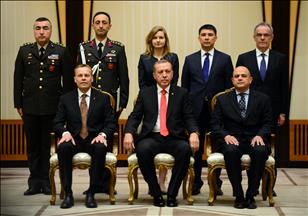
Last year, high-level Turkish and Gambian security officials signed a host of such security agreements.
Gambia is an officially secular country, but Muslims comprise 90 percent of its population.
“We need more equipment to implement latest CSI techniques that we have learnt in Turkey,” Darboe said.
He invited Turkish authorities to visit his country to see the progress made and continue its assistance.
The Gambian program will officially end July 14, but new ones will be held within two months for the Ivory Coast and Somalia.