10 April 2016•Update: 14 April 2016
ISTANBUL
President of the Al-Sharq Forum think tank, Wadah Khanfar, said on Sunday that hope was the only way to end conflict and desperation over the Middle East and North Africa (MENA) region's soul.
Addressing a two-day conference on violent extremism organized by the forum in Istanbul, Khanfar said that the MENA region was in a bitter situation.
Stating that the region is not only in a geopolitical conflict but also in an intellectual conflict, Khanfar said: "We [people in the MENA] have to be brave enough to resume a new enlightenment and modernity which is part of us and Islam."
Khanfar said that people in the region needed to stick to the democracy and freedom projects which began with the outcry of a young man in Tunisia in 2011, kick-starting the ‘Arab Spring’ revolutions.
"All people in the region had been wanting for it for decades. When you feel that you have been liberated you would not want to go back," Khanfar said.
Noting that the Arab uprisings brought people hope as well as pain, Khanfar said: "We saw hope but we also saw how hope ended. Desperation should not undermine our hope. Hope is the only way to save conflict over the MENA region's soul."
Khanfar also blamed a “Western-centric approach” and Western interest in the region for conflicts there.
"The Western-centric approach made us feel that we will never be protected unless America or the EU protect us. [...] They were giving fear and they say ‘stick to me’.
"We were scared from liberating ourselves from Western-centric ideas. We needed America, Europe, and even Russia to come and liberate us," Khanfar added.
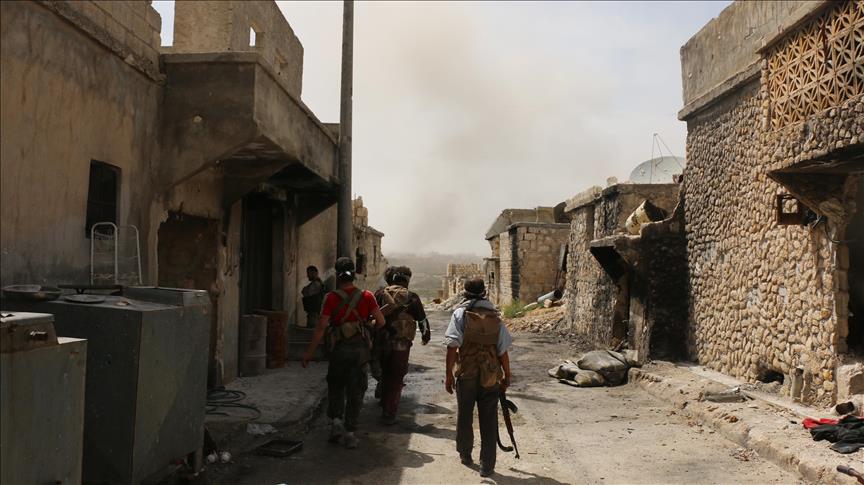
The MENA region is in turmoil as Syria, Iraq, Libya and Yemen are in civil war.
Syria has remained locked in a vicious civil war since early 2011, when the Assad regime cracked down on pro-democracy protests -- that erupted as part of the ‘Arab Spring’ uprisings -- with unexpected ferocity.
Since then, more than 250,000 people in the war-torn country have been killed and more than 10 million displaced, according to UN figures.
Libya has remained in a state of turmoil since 2011, when a bloody rebellion ended with the ouster and death of longtime strongman Muammar Gaddafi.
Since then, the country’s stark political divisions have yielded two rival seats of government, one in Tobruk and one in Tripoli, each of which boasts its own military capacity and legislative assembly.
Fractious Yemen has also remained in conflict since September of 2014, when Shia Houthis overran the capital Sanaa and other parts of the country.
According to the UN, some 934 children were killed and 1,356 were injured last year in Yemen. More than 60 percent were killed and injured in airstrikes across the country.