Emirhan Yilmaz and Emir Yildirim
17 July 2026•Update: 17 July 2026
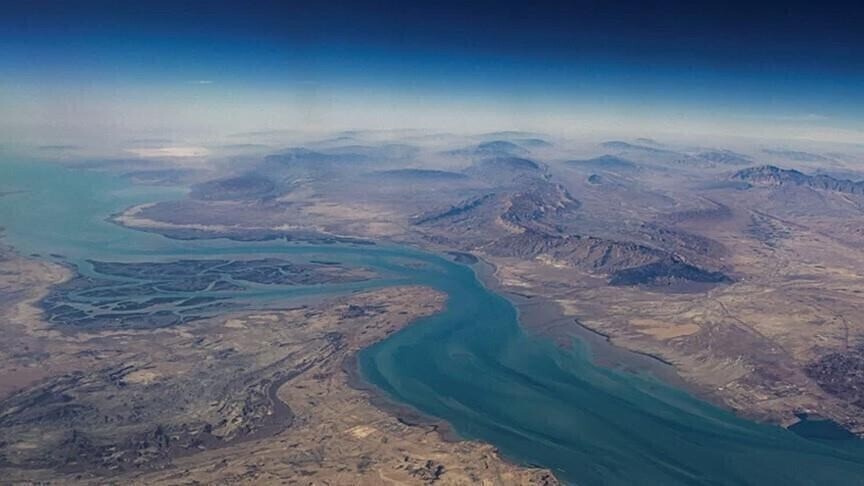
Renewed US-Iran hostilities in the Middle East have reversed the gradual normalization of maritime trade through the Strait of Hormuz, disrupting shipping operations in the region once again.
An average of 130 ships transited the Strait of Hormuz each day before the US-Israel-Iran war broke out at the end of February. This number dropped over 90% during the conflict.
Ship traffic rose to an average of over 70 per day after the US and Iran reached an agreement on June 14.
Reignited regional tensions and new attacks on ships sharply slowed traffic through the Strait of Hormuz after it had begun to show signs of recovery.
Only nine vessels transited the strait on Wednesday versus 13 on Tuesday, according to Kpler.
US President Donald Trump said the American blockade of the Strait of Hormuz would be reinstated and that a 20% transit fee would be imposed on all ships transiting the waterway.
The Khatam al-Anbiya Central Headquarters, the Iranian Armed Forces unit responsible for the war effort, said it would not allow Washington to intervene in the Strait of Hormuz.
German logistics giant Hapag-Lloyd said that the US charging a fee for passage through international waters would be wrong.
Trump announced that instead of imposing a 20% transit fee, the US would enter into trade and investment deals with various Gulf countries.
Bilgehan Engin, president of the Turkish Forwarding and Logistics Association (UTIKAD), told Anadolu that the developments in the Strait of Hormuz are not occurring in a vacuum, as the COVID-19 pandemic, the Russia-Ukraine war, security issues in the Red Sea, and disruptions around the Suez Canal have already prompted the global logistics sector to adapt to a high-risk environment.
Engin stated that the sector is better prepared to handle similar crises but that does not mean the risks have disappeared, especially in the Strait of Hormuz, through which around one-fifth of the world’s oil passes.
“If security risks rise in the region again, shipowners and shippers will update their analyses, driving up war risk premiums and insurance costs, while prompting the implementation of additional security measures on certain routes,” he said. “These will create upwards pressure on freight rates and other cost increases in the energy, petrochemical, and raw material supply chains.”
“The most effective response today will be to make more effective use of alternative routes, diverse supply sources, and multimodal transportation solutions. Companies are making plans that prioritize supply chain continuity than solely focusing on costs,” he added.
Engin stated that predictability is one of the most fundamental requirements of global trade, so any new measure that increases transit costs in global maritime transport would affect the entire global supply chain.
“If additional fees are imposed on ships at strategic transit points like the Strait of Hormuz, these costs will be passed onto freight rates,” he said. “An increase in energy transportation costs could affect many sectors and fuel inflationary pressures worldwide.”
Engin added that global maritime transport has been conducted safely for many years due to common rules within international law, so preserving this structure and ensuring predictability, as well as the principle of free passage, are of great importance for global trade to function as intended.