66-million-year-old fossil discovered in Turkish capital
Researchers believe ancient inhabitants may have carried the gastropod fossil to 5,000-year-old Kulhoyuk settlement
Yasemin Kalyoncuoglu
14 September 2026•Update: 14 September 2026
ANKARA
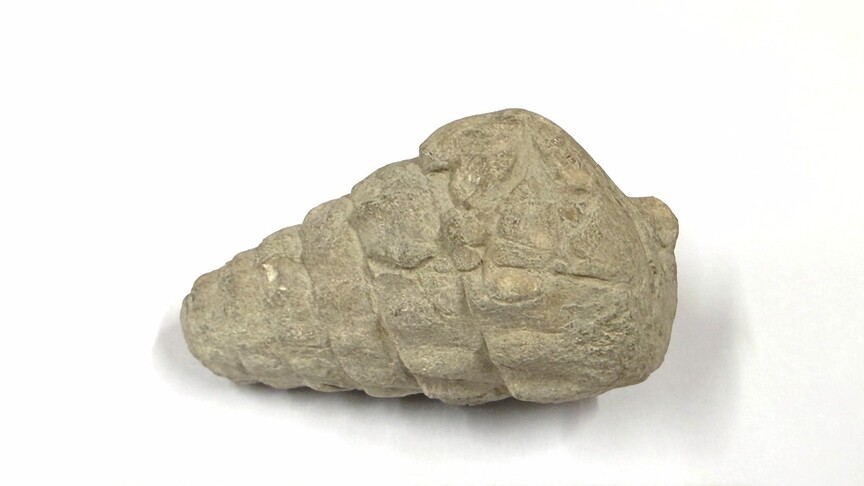
A fossil belonging to a gastropod that lived along the shores of the Tethys Sea 66 million years ago has been discovered at an archaeological site in the Turkish capital Ankara, Culture and Tourism Minister Mehmet Nuri Ersoy said Monday.
The fossil was unearthed during excavations at Kulhoyuk in the Oyaca neighborhood of Ankara’s Golbasi district.
“During our excavations in Golbasi’s Oyaca area, a gastropod fossil that lived on the shores of the Tethys Sea 66 million years ago was discovered,” Ersoy said on social media.
“The fossil is believed to date from the final phases of the Tethys Sea. The assessment that it may have been brought to the settlement by Kulhoyuk residents thousands of years ago makes the discovery even more remarkable,” he added.
Gastropods are a class of mollusks that includes snails and slugs.
Researchers believe the specimen dates to one of the final periods of the Tethys Sea, a prehistoric body of water that began forming about 250 million years ago and once covered parts of what is now Central Anatolia.
Kulhoyuk, meanwhile, is a roughly 5,000-year-old settlement associated with the Hattian and Hittite civilizations. The vast age difference means the fossilized creature did not live alongside the settlement’s inhabitants.
Instead, researchers are considering whether ancient residents found the fossil elsewhere and deliberately carried it to Kulhoyuk. The possibility has opened a new line of investigation into how the object reached the settlement and what significance it may have held for its inhabitants.
The discovery follows another recent find at Kulhoyuk, where archaeologists identified the earliest-known seed remains of Ankara’s distinctive “Sevgi Cicegi,” or Love Flower, inside a 4,000-year-old Hittite vessel.
Excavations at Kulhoyuk have been conducted since 2021 under a long-term archaeological program backed by the Turkish presidency. The work is led by Associate Professor Derya Yilmaz Tekin on behalf of Ankara University and the Culture and Tourism Ministry.
Ersoy said excavations would continue to shed light on the history of Kulhoyuk through new discoveries.
66-million-year-old fossil discovered in Turkish capital