Shadi Khan Saif and Sardar Hussain
22 September 2015•Update: 22 September 2015
KABUL, Afghanistan
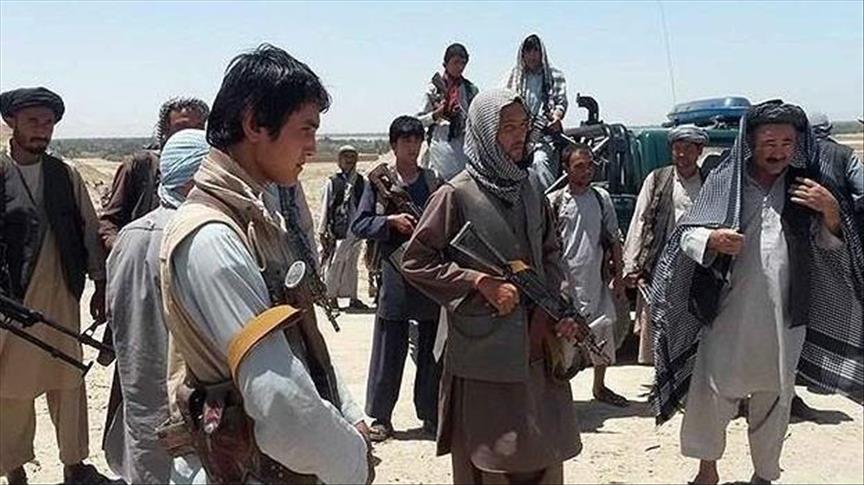
In his first Eid message, the Taliban’s Supreme Leader Mullah Akhtar Mansoor has stressed the movement’s unity under his command and refused to resume peace talks until Kabul expels foreign forces.
Half of Mansoor’s near-3,000 word statement focused on consolidating his leadership and denying the “rumors and propaganda” about division within the Taliban ranks.
“I assure my mujahideen and my nation… [I] will keep the ranks of mujahideen united in the same way as they were united in the past,” he said in the English language version of the statement.
However, in an apparent recognition of splits in the Taliban, he called on “those brothers-in-faith who have grievances to thwart the maligning propaganda and diabolical conspiracies of the enemy."
The Taliban leadership traditionally releases lengthy messages around the two Muslim festivals of the year - Ramadan and the feast of the sacrifice.
Despite Mansoor’s comments, Jawed Kohistani, a former Afghan military intelligence officer, told Anadolu Agency the schism in the Taliban was deepening.
“An overwhelming lot of the Taliban leaders and fighters are either against Mullah Mansoor or neutral at this stage, though they are conducting self-styled attacks in various parts of the country,” he said.
Mullah Abdul Manan Niazi, a senior member of the Taliban’s Supreme Council, said Mansoor had failed to smooth out differences and placate disgruntled Taliban commanders.
“Though we waited for two months for Mullah Akhtar Mansoor to allay our concerns… he failed to take notice of the realities on the ground and the sensitivity of the situation,” he said.
Mansoor said the continued presence of foreign forces in Afghanistan - around 13,000 foreign troops, including 10,000 U.S. soldiers, stayed after the end of NATO's combat mission in December - was reason to carry on fighting.
He added that peace talks would be meaningless while the Kabul government allowed “invaders” to remain.
“If the Kabul administration wants to end the war and establish peace in the country, it is possible through ending the occupation and revoking all military and security treaties with the invaders,” Mansoor said.
The talks have been suspended since news of the death of Mansoor's predecessor broke in July.
Latif Nazari, an Afghan political analyst, noted Mansoor’s presentation of himself as “liberal and soft” over modern education and the role of aid groups in Afghanistan.
“Religious and modern education is a great and urgent need for the new generation of our country,” Mansoor said. “I instruct mujahideen to pave the way for religious and modern education in areas of their administration and render them assistance.”
Naziri said this flexible approach was a response to the emergence of a hardline group associating itself with Daesh.
“We must acknowledge that the Taliban movement is no longer the one it was over a decade ago, though many of their outdated and radical views remain dominant in their approach, but at least in public they have started to present themselves as more liberal than the past,” Naziri told Anadolu Agency.