- 'We are very concerned that a hunger crisis is on the way,' says Sabine Minninger, a senior policy advisor at Bread for the World
- Oxfam Deutschland warns that a prolonged conflict could send energy prices soaring, jeopardizing countries’ pledges to meet climate protection goals
- Christiane Averbeck, executive director of the Climate Alliance Germany, says Merz government should uphold its climate finance pledges and support transition to renewables
Could a blockade in the Strait of Hormuz end up making food more expensive in poorer countries?
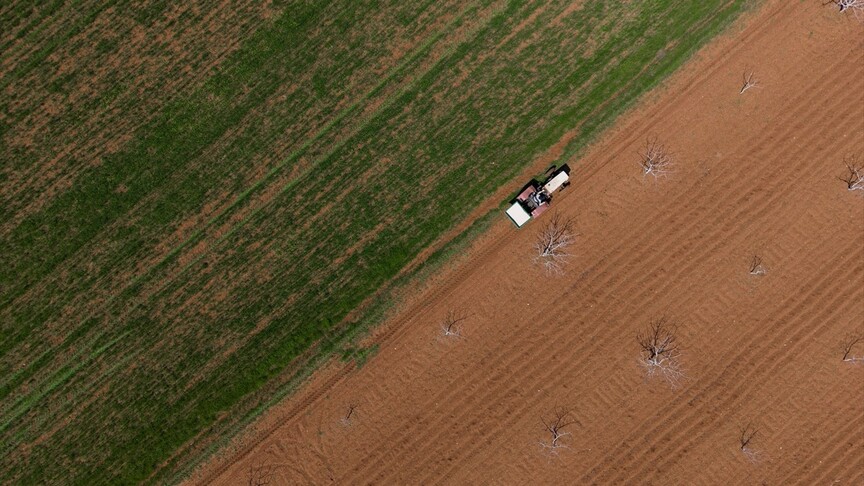
Advocacy groups have warned that higher energy prices would drive up the cost of fertilizers, agrochemicals and transport — and ultimately worsen hunger in the world’s poorest regions.
Sabine Minninger, a senior policy advisor at Bread for the World, said that many least developed and low-income countries already struggling with the impacts of global warming now face another major crisis, as the prolonged conflict with Iran severely affects those heavily dependent on oil and energy imports.
“If this war goes on and if the Strait of Hormuz remains closed, it will have a tremendous impact on food security, especially in the poorest countries, such as those in Africa,” she told Anadolu.
"We are very concerned that a hunger crisis is on the way,” she said.
With the war between the US and Israel in its eleventh week, disruption has intensified along the Strait of Hormuz. Hundreds of vessels are reportedly stranded in narrow waterway that serves as a vital artery for petrochemicals, fertilizers, and other refined products.
The World Food Programme has warned that a prolonged Middle East conflict could push tens of millions more people into acute hunger, especially if higher fuel and fertilizer prices collide with climate shocks, export restrictions or already fragile food systems.
Minninger said the latest crisis shows how deeply food security remains tied to fossil fuel dependence — and why the transition to renewable energy is not only a climate issue but also a development and security concern.
Rich countries should do more
Poorer countries, she said, are being hit repeatedly by crises they did little to cause: climate-related droughts and floods, volatile global energy markets and rising borrowing costs.
She said rich countries like Germany – responsible for a large share of emissions and environmental damage – should do more to support least developed and developing countries with funding and technology to reduce their reliance on fossil fuels and accelerate the shift to renewables.
Climate and aid groups say the crisis comes as wealthy countries are already falling short of what vulnerable nations need to adapt to climate change and reduce emissions.
Developed countries previously promised to mobilize $100 billion a year in climate finance for poorer nations. At the COP29 climate summit in Baku, governments agreed to increase that target to at least $300 billion a year by 2035.
But aid groups say the actual funds provided by wealthy nations are far below the promised pledges. They also warn that geopolitical tensions, higher energy prices, and budget cuts in donor countries are weakening political will.
Jan Kowalzig, a senior policy adviser at Oxfam Deutschland, said the US withdrawal from the Paris Agreement and the Trump administration’s cancellation of climate finance commitments have damaged international efforts.
“The US is not playing a very constructive role at the moment,” Kowalzig told Anadolu. “They are also trying to undermine, for instance, the role of the World Bank and the role it plays in transitioning away from fossil fuels.”
He said Germany, long one of the leading contributors to international climate finance, must not retreat from its commitments as Chancellor Friedrich Merz’s government considers budget cuts amid economic headwinds.
“We call on Germany to fulfill its promise to increase budgetary allocations for climate finance to at least €6 billion a year,” Kowalzig said. “This promise is at the moment not going to be held, given the current cuts.”
Kowalzig said Germany and other developed countries should make clear before the UN Climate Change Conference (COP 31) in Antalya how they intend to contribute to the agreed climate finance goals.
“These pledges and commitments from developed countries are now overdue, we now need new impetus” he said.
NGOs: Germany must not retreat on climate action
Christiane Averbeck, executive director of Climate Alliance Germany, a broad civil society coalition for climate protection, said the Iran conflict has once again exposed the risks of dependence on fossil fuel imports.
“For us, it’s a clear signal that we should get out of fossil fuels and should push for more renewables,” Averbeck told Anadolu.
She said climate groups will step up demonstrations in the coming weeks, demanding that the Merz government uphold commitments under the Paris Agreement, meet its climate pledges, and take a more active role in supporting the transition to renewables.
“The current government is not paying great interest in doing something for the climate, at least a part of the government,” Averbeck said, referring to reluctance among Merz’s conservatives in the governing coalition, who oppose ambitious climate goals and consider cuts in climate funding.
“We expect that the path that was chosen in the last years will continue, that we really stick to the Paris Climate Agreement and to the goals that we set years ago,” she said.
Averbeck said Germany should speed up its transition away from fossil fuels at home while helping vulnerable countries finance renewable energy and adaptation.
She also said the latest crisis underscores the need for international cooperation at a time when wars, debt pressures and energy insecurity are straining trust between wealthy and poorer nations.
“I think what is very crucial is that we push very much for multilateralism, that it’s only possible to solve all these crises by working together,” Averbeck said. “So we need strong alliances ahead of the COP 31 to build trust, to develop ideas on how to deal with the climate crisis but also with the energy crisis.”