by Ainur Rohmah
JAKARTA
Indonesia says it is awaiting results of its own investigation before deciding if it will challenge Australia over allegations that the country’s officials paid people smugglers to return to Indonesian waters.
When contacted by text message Friday, Foreign Affairs Ministry spokesperson Arrmanatha Nasir told Anadolu Agency that they were waiting for their inquiry to conclude.
"Please wait. We will reply soon," Nasir responded.
He gave no response to queries asking exactly when the inquiry would finish.
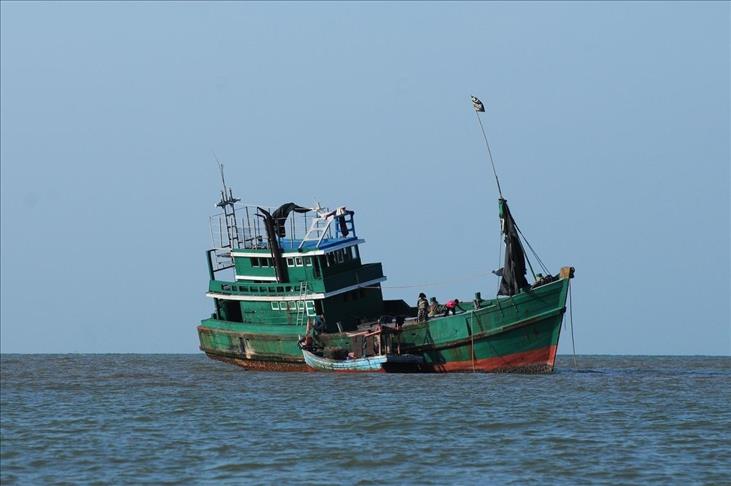
Nasir told Anadolu Agency Thursday that Indonesia had received information that two boats carrying six crew and 65 illegal migrants entered Australian waters in May.
"The information we got was that each of the crew was paid $5000 [to leave]," Arrmanata said.
"We will decide further action depending on the investigation result. If it's true, it is of great concern," he added.
When questioned on Melbourne radio station 3AW Friday, Australian Prime Minister Tony Abbott did not deny the allegations.
"I just don't want to go into details," he replied. "The Australian government will do whatever we need to do to keep this evil trade [people trafficking] stopped."
The show's host asked Abbot if this would include paying people smugglers.
"We will do whatever we need to do to keep this trade stopped," the PM repeated.
He later added that the government would do "whatever it takes" as long as it was "consistent with being a humane and decent country."
Asked whether he would support such payment in theory, he said: "I'm just not going to get into hypotheticals."
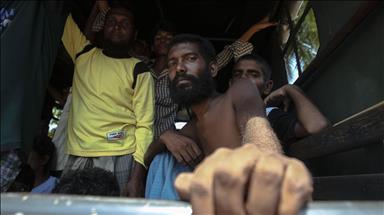
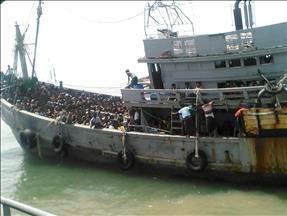
The Sydney Morning Herald reported Wednesday that the boat -- containing 65 Bangladeshis, Sri Lankans and Rohingya Muslims including a pregnant woman and children -- was allegedly intercepted by Australian navy and customs officials in late May.
Migrants who were on board have claimed that outside of the money the crew were also supplied with two new boats to transport them back to Indonesia.
"We were given money [by Australia], but only the crew of the boats received it," Kayuran -- a Sri Lankan -- told Kompas.com on Wednesday from a hotel in Kupang City in Rote island, where the migrants have since been detained.
Nasir has said that Indonesia would consider further action if the claims proved to be true, including lodging a protest note with Australia or summoning its diplomats in Jakarta.
"There was a pregnant woman and children on board... That [Australia's alleged] action endangered people's lives because it occurred in the middle of the sea," he said.
"This a problem of humanity. We have to have empathy with other humans in trouble at sea."
Rote Police Chief Adjunct Senior Commissioner M. Hidayat told Anadolu Agency by phone that representatives of the Australia Federal Police (AFP) had arrived on the island Thursday to investigate the claims.
"We'll make a presentation [to the representatives], and then they will see the ship that was used by the migrants," he said.
Hidayat said that the crew had told police that Australian naval troops had caught them on Pasir island - the maritime border between Indonesia and Australia - and sent them back to Indonesian waters.
"There is a person identified as Agus who [they say] gave them money," said Hidayat, adding that police are still investigating if the identity was genuine.
According to the testimony of the crew, Hidayat - who said he had never heard of such payments being made before - said that Agus came aboard the boat from the Australian navy ship before offering the money.
He said that the crew had said that the money was presented to them as "financial capital" to move into new lines of business.
Hidayat said that the crew - who came from Manado and Ambon in Indonesia - were recruited by an "agent" who worked for a "big smuggler."
He said they were not paid upfront and had been told they would be paid between 30-40 million rupiah ($2,257-$3,009) on delivery of the migrants.
The migrants have since been placed in a temporary detention center, while the crew are to be tried on human smuggling charges.
If found guilty they face between 5 and 15 years in prison.