By Joshua Carroll
YANGON, Myanmar
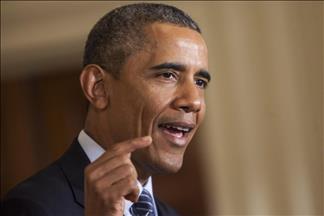
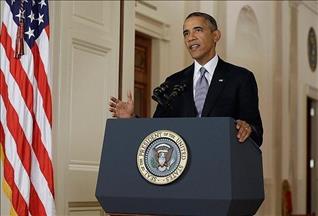
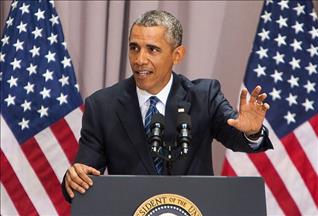
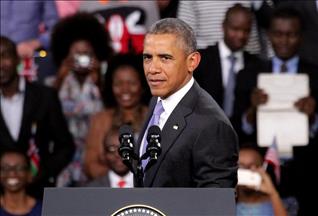
U.S. President Barack Obama rounded off his second visit to Myanmar Friday with a youth Q&A session in Yangon, where some audience members staged a brief protest with placards declaring the country’s democratic reform process “fake.”
The visit comes amid growing concerns that Myanmar’s transition to democracy, which began in 2010, has stalled ahead of a landmark election scheduled for late next year. The mood has been more reserved than Obama's previous visit in 2012, when he hailed the country’s “remarkable journey” towards democracy.
The president touched down in Yangon, Myanmar’s largest city, on Friday morning after attending the East Asia Summit in the capital city of Nay Pyi Taw earlier this week.
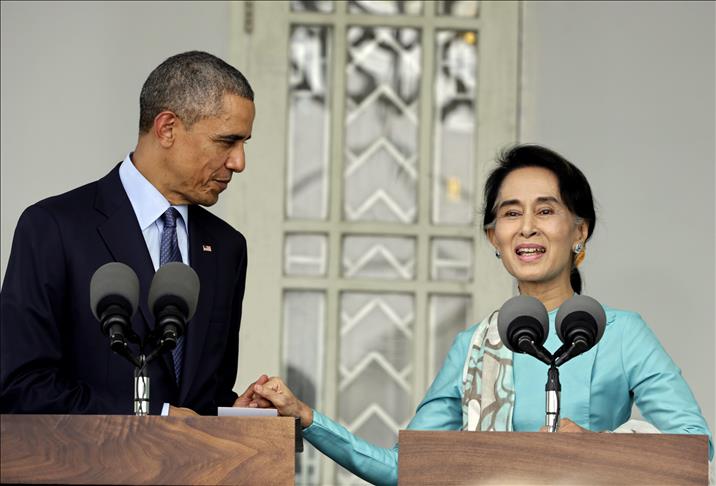
Before the town hall-style Q&A with members of the Young Southeast Asian Leaders Initiative, he met with opposition leader Aung San Suu Kyi at her lakeside residence, where she spent almost 15 years under house arrest for opposing the former military junta.
In a move that will please advocates for Myanmar’s persecuted Muslims, Obama voiced support for the Rohingya, who have been the main victims of waves of Buddhist mob violence that erupted in 2012.
"Discrimination against the Rohingya or any other religious minority I think does not express the kind of country that Burma over the long term wants to be," he told reporters during a press conference with Suu Kyi after their meeting.
Campaigners had called on the president to use the Rohingya’s ethnic name during the visit despite bitter opposition to the term by the Myanmar government and many ordinary citizens, who consider the minority illegal immigrants from Bangladesh and favor the term "Bengali" to describe them.
Suu Kyi, once considered an unblemished democracy icon, has been widely criticized abroad for failing to speak out in defense of the Rohingya or use their ethnic name.
During the Q&A at Yangon University, Obama - however - avoided the term. But he did call on Myanmar’s young to “speak out on behalf of tolerance and diversity and respect” in response to a question about religious violence in Rakhine state, where many of the country’s roughly 1 million Rohingya live.
Suhail Ahmed, a 25-year-old Muslim, told the Anadolu Agency after Obama’s appearance that he thought the president could help solve the sectarian conflict by supporting Suu Kyi’s bid to become president after next year’s election.
At the moment she is barred because of a clause in the constitution that prevents anyone with foreign relatives from holding the presidency. Suu Kyi’s late husband was British, as are her two sons.
Obama spoke out against the clause at Suu Kyi’s home just hours earlier, though he was careful not to directly back Suu Kyi’s candidacy.
“I don't understand a provision that would bar somebody from running for president because of who their children are. That doesn't make much sense to me,” he said.
Suu Kyi and Obama embraced warmly in front of news cameras and made jokes throughout the press conference. Recently there have been signs of their relationship cooling; Suu Kyi last week accusing the U.S. of being “overly optimistic” about the country's reform process.
On Thursday, Obama held talks with Myanmar’s President, Thein Sein. He urged the leader to hold “inclusive” elections next year and to protect the rights of the Rohingya and other Muslims.
During the meeting Obama stressed there is “no example of a country that is successful if its people are divided based on religion or ethnicity,” he told the audience at Yangon University.
He flew out of Yangon to Australia Friday afternoon for the G20 summit in Brisbane. He leaves behind a country grappling with widespread human rights abuses and a military that still has effective control of parliament despite the reforms.
He hopes he will be able to use U.S. influence to change that before next year’s election, but critics say Myanmar’s government was never serious about genuine democratic reform in the first place.
As people filtered from the university hall after Obama’s appearance, Ahmed gestured at a giant Myanmar flag. The design replaced the old emblem in 2010 shortly before reforms began, and was meant to mark a new era for the country.
“[This is] fake democracy,” he said “fake democracy and fake reform.”
http://www.aa.com.tr/en