By Moses Michael-Phiri
BLANTYRE, Malawi
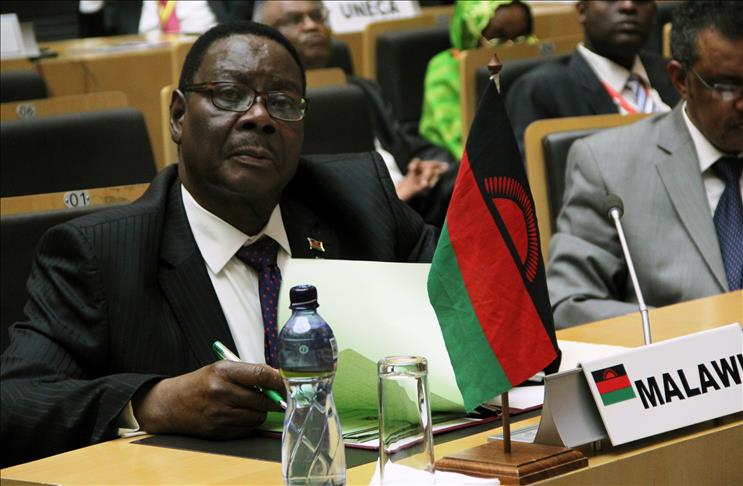
One year since Peter Mutharika was sworn in as president, Malawians say the new leader has done little to alleviate the poverty-stricken country’s dire economic situation.
Mutharika beat out Malawi’s first female president, Joyce Banda, in a hotly contested election on May 20, 2014, the results of which were disputed.
Mutharika, the younger brother of late President Bingu wa Mutharika, is seen by many as a progressive leader bent on ending the widespread corruption that had marked Banda’s rule.
Hated by the West and loved by the East, Mutharika promised to end what was described as incompetent governance instituted by Banda following Bingu’s abrupt death in 2012. Bingu had died three years into his final five-year term.
Banda, a darling of western governments, who is currently in self-imposed exile, lost considerable support following revelations that top officials in her administration had helped themselves to close to $100 million worth of public funds in a scandal later dubbed “Cashgate”.
But in the one year that Mutharika and his Democratic Progressive Party (DPP) have been in power, critics say the new leadership has taken a “business-as-usual approach” instead of fulfilling their electoral promises.
Mutharika, for his part, in a Tuesday speech marking the end of his first year in office, defended his policies, promising his fellow Malawians that change was just around the corner.
He went on to say he had come to power at a time when “the economy was very unstable, amid the Cashgate scandal” and when “the country’s development partners had withdrawn budget support because of the looting scandal.”
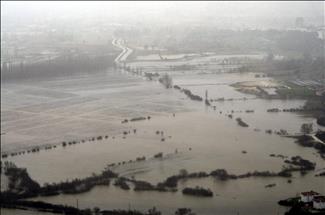
Mutharika, however, went on to say that, in this short period, Malawi had enjoyed positive economic growth despite devastating floods that killed 176 people and dry spells that affected the country’s agricultural production.
He estimated that the national economy had grown by some 5.5 percent and was expected to reach 7 percent – or higher – starting next year.
“Inflation decelerated from 24.2 percent in November 2014 to 18.3 percent in April 2015, [which is] mainly explained by the relative strengthening of the Malawi kwacha, supported by declining pump prices of fuel,” Mutharika contended.
“We expect annual inflation to fall to 16.5 percent in 2015, compared to 23.8 percent in 2014,” he added.
The Malawian president added that this anticipated decline in inflation was expected to raise citizens’ disposable incomes, while interest rates were also expected to fall in 2016.
“The foreign exchange rate has continued to stabilize as a result of government initiatives to stock enough foreign exchange reserves, which have been more than three months of import cover,” he said.
“This has enabled the private sector to plan and be able to import their raw materials for industrial production without much difficulty,” Mutharika declared in his address.
Yet despite these assurances, the main opposition Malawi Congress Party has accused Mutharika of dragging his feet in regards to pressing national issues.
Ken Msonda, a spokesman for Banda’s People’s Party (PP), said the president was merely riding the wave of his brother’s success.
“There is nothing Mutharika can say he has done during his first year in office,” Msonda told Anadolu Agency. “Malawians deserve better; they want economic progress, but it seems we are going in circles and more people are languishing in poverty.”
Billy Mayaya, a vocal and government critic, says Mutharika must first fulfill his electoral promises.
“All we have seen [during his first year in office] is appointments along political lines, nothing more,” said Mayaya.
On Tuesday, State House press officer Gerald Viola asserted that Mutharika’s biggest achievement since assuming office was to “bring back donor confidence”.
In March, the IMF resumed its financial support for Malawi to the tune of $20 million worth of credit. And earlier this week, the African Development Bank disbursed $29 million in budget support for Malawi.
“The recent disbursements to Malawi signify a shift of mindset by multilateral and bilateral donors to a third-world country that has been in the spotlight for all the wrong reasons following the Cashgate scandal,” Viola said.
What’s more, even Mutharika’s critics credit him with reducing the number of cabinet officers from 43 to 20.
Mutharika has also embarked on a massive reform drive aimed at streamlining the country’s bloated civil service, which, he says, will save an estimated 30 percent of the state’s resources each year.
An educator and lawyer with experience in the field of international law, Mutharika will have four more years to prove his critics wrong.
His supporters were no doubt cheered by a report issued Tuesday by the U.S.-based World Justice Project, which ranked Malawi fifth in Africa in terms of adherence to the rule of law.