Anadolu Ajansı © 2026


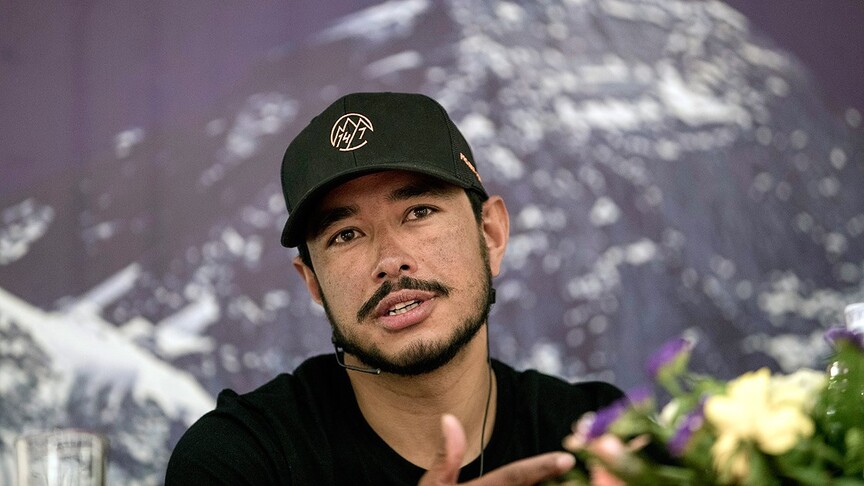
Nepalese mountaineering icon Nirmal Purja is among 10 climbers missing after an avalanche struck Pakistan's Broad Peak, triggering a major search and rescue operation on one of the world's most dangerous mountains.
Known around the world as "Nims Dai," the former Gurkha soldier rose to global prominence in 2019 by achieving in months what many believed would take years – or was simply impossible.
From climbing all 14 of the world's 8,000-meter peaks in a record six months and six days to leading the first successful winter ascent of K2 by an all-Nepali team, Purja has repeatedly redefined the limits of human endurance and cemented his place among the greatest mountaineers of his generation.
Born in Dana, a remote village in Nepal’s Myagdi district, Purja followed a path familiar to many young men from the country’s hill regions by joining the British Army.
For many Nepalis, becoming a Gurkha – Nepali soldiers renowned for their bravery and long history of service in the British military – represents one of the few opportunities to escape poverty and build a better future.
Purja excelled quickly, earning a place in the elite Special Boat Service (SBS), one of Britain’s most demanding special forces units and a role rarely attained by Gurkha soldiers.
During his 16-year military career, he was awarded the Member of the Most Excellent Order of the British Empire (MBE) by Queen Elizabeth II in 2018 in recognition of his exceptional and high-risk service.
Ironically, it was during his military career that he discovered the mountains that would define his life.
While leading fellow soldiers on a trek to Everest Base Camp, Purja extended his stay to climb smaller peaks in the Everest region before returning to duty. The experience changed everything.
He left behind a prestigious military career and its financial security to pursue mountaineering full time.
In 2019, Purja announced "Project Possible," an audacious plan to climb all 14 mountains higher than 8,000 meters in just seven months.
Many doubted he could achieve it.
The challenge demanded enormous financial resources, exceptional physical endurance and favorable weather across Nepal, China and Pakistan.
Purja surpassed even his own target.
He completed all 14 summits in six months and six days, shattering the previous record of more than seven years.
The feat transformed him into one of the world's best-known mountaineers.
At a time when Sherpas largely dominated Himalayan climbing, Purja showed that climbers from other Nepali communities could also compete at the highest level and accomplish what many had considered impossible.
His achievement became a global sensation.
Netflix documented the expedition in 14 Peaks: Nothing Is Impossible, while appearances on international media platforms, including The Joe Rogan Experience, introduced him to audiences far beyond the climbing community.
“Needless to say, Nims Dai is a legendary mountaineer,” said veteran climber Lhakpa Sherpa, who supported him early in his career.
“His vision, leadership and extraordinary achievements have inspired climbers around the world. That elevated Nepal’s mountaineering community to the global stage.”
Purja's record for climbing all 14 eight-thousanders was broken in 2023 by Norwegian climber Kristin Harila and Nepal's Tenzing Lama Sherpa.
Rather than expressing disappointment, Purja congratulated the pair, who in turn credited him with inspiring a new generation of climbers.
He documented his journey in the bestselling memoir Beyond Possible, which has since been translated into multiple languages.
But Purja's influence extended beyond individual records.
In 2021, together with fellow Nepali climber Mingma Gyalje Sherpa, widely known as Mingma G, he led the expedition that achieved the first successful winter ascent of K2.
The climb, completed by a team of 10 Nepali climbers, ended decades of failed international attempts and marked one of the greatest milestones in Himalayan mountaineering.
Many in the climbing community credit Purja with changing perceptions of Nepali climbers, who for decades had often been viewed primarily as guides and support staff despite enabling many foreign expeditions.
“Never give up” became synonymous with Purja's approach to climbing.
Even after rewriting mountaineering history, Purja continued setting new goals.
His latest mission was to become the first person to climb all 14 mountains above 8,000 meters twice without supplemental oxygen.
Broad Peak was not originally part of that plan.
Just days before leaving for Pakistan, however, he realized summiting the mountain would leave only Cho Oyu to complete the unprecedented achievement.
Writing on X three days before he went missing, Purja explained the decision.
"This was never the plan. Initially, the plan was to climb just G2. But just before setting off for Pakistan, I ran the numbers on my 8000m summits. That’s when it hit me: if I tick off Broad Peak whilst I’m here , only one remains “Cho Oyu.” Then I become the FIRST person in history to climb all 14 eight-thousanders twice. Without oxygen."
Alongside climbing, Purja built several businesses, including his own equipment brand and Elite Exped, a London-based expedition company working closely with Nepali Sherpas.
Following reports that he had gone missing, his longtime climbing partner Mingma David Sherpa traveled to Pakistan with experienced helicopter pilots to assist search efforts.
Purja's career has not been without controversy.
Critics have questioned his reliance on helicopters, fixed ropes and guides during expeditions.
Others accused him of using a Nepali passport after acquiring British citizenship to reduce climbing royalties.
In 2024, The New York Times reported allegations by two women who accused Purja of sexual misconduct. One alleged he sexually assaulted her in a hotel room in 2023, while the other said he grabbed and propositioned her during a K2 expedition in 2022.
Purja denied the allegations through his lawyer.
Supporters argue that, regardless of the criticism, his achievements have helped transform Nepal's image as the world's premier destination for high-altitude climbing and adventure tourism.
“Being a human, everyone has merits and demerits,” said Lhakpa. “He’s a legendary climber. His work has helped Nepal in many ways.”
news_share_descriptionsubscription_contact