Yasin Gungor
17 September 2026•Update: 17 September 2026
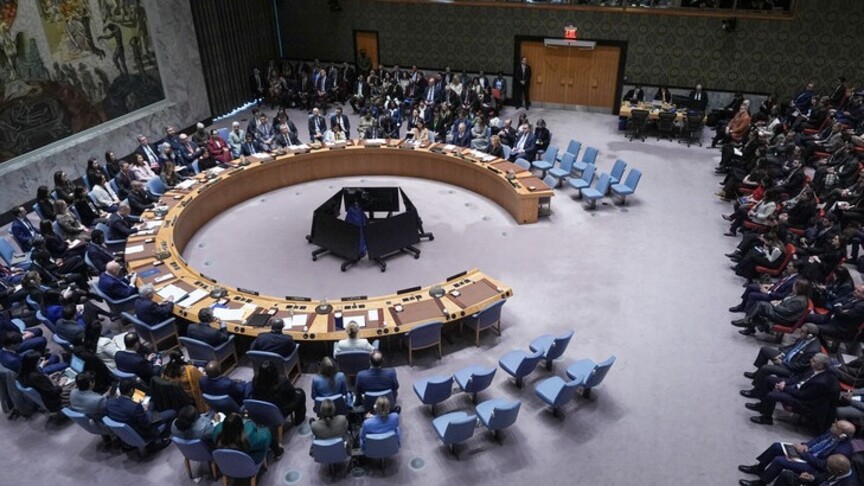
The UN Security Council failed to extend the mandate Thursday of an expert panel monitoring sanctions against Iran following a double veto by Russia and China during a contentious session.
"The Security Council concluded its consideration of the Iranian nuclear issue, and the item non-proliferation was removed from the list of matters of which the council is seized," the Russian delegation told the chamber, asserting that Resolution 2231 expired Oct. 18, 2025, leaving no procedural or legal foundation for the meeting.
The US-sponsored draft resolution sought to prolong the Panel of Experts assisting the revived 1737 Iran Sanctions Committee under Resolution 1929, ahead of the expiration of its mandate on Sept. 26. The draft secured 11 votes with two abstentions. It was rejected owing to the negative votes cast by Moscow and Beijing – two permanent members on the council.
- Procedural standoff on agenda
The session opened under the French presidency with an immediate procedural dispute when Moscow objected to holding discussions under the "Non-proliferation" agenda item, characterizing the move as an attempt "to grossly abuse procedure and conduct a meeting on the selfsame non-existent agenda item."
Beijing aligned with Moscow's position, urging member nations to avoid "political confrontation and pressurization," arguing that respecting statutory expirations remains essential to preserve multilateral credibility and foster dialogue.
France noted that Resolution 1929 was legally restored Sept. 27, 2025, via snapback provisions acknowledged by the UN Secretary-General, legally requiring council action to renew the expert monitoring body.
Accusations of shielding evasion networks
The US sharply criticized the double veto, declaring that opposing powers acted "to stifle reporting that implicates their own activities in support of rogue regimes." Washington warned that dismantling the panel eliminates crucial, evidence-based reporting on illicit military cooperation, creating an enforcement vacuum that aids evasion networks.
The US delegation added that following the obstruction, it will bypass efforts to establish the panel within the committee and focus on appointing a committee chair and updating designations.
The UK said it regretted that the resolution was vetoed and accused Moscow and Beijing of choosing "to shield Iran" as Tehran accelerates nuclear enrichment without "credible civilian justification," while barring international inspectors.