Diyar Guldogan
15 May 2026•Update: 15 May 2026
More than 15 million people in Syria will require humanitarian assistance this year, the UN Under-Secretary-General for Humanitarian Affairs and Emergency Relief Coordinator said on Friday.
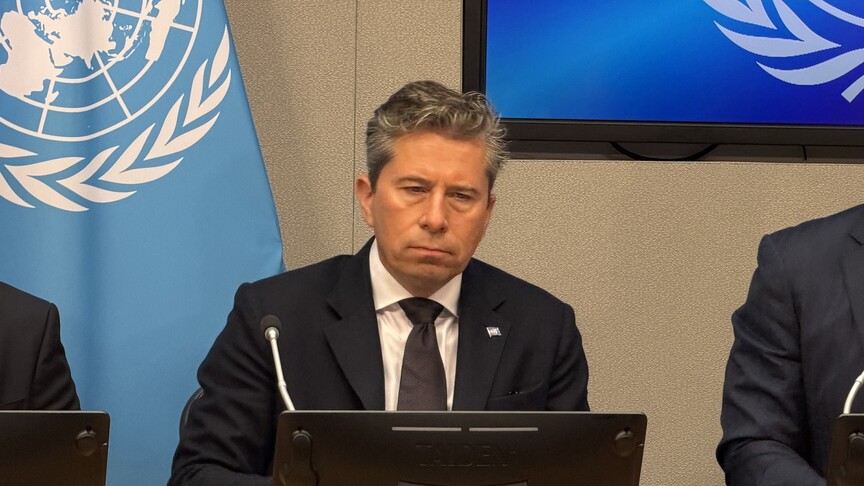
"Humanitarian needs remain significant," Tom Fletcher said at a Security Council meeting.
"About two thirds of the population, over 15 million people, most of them women, girls, and children, require help this year," he said.
Fletcher stressed that women and children remain particularly vulnerable after years of conflict, displacement, and economic collapse.
"We prioritize women, girls, and children in all our humanitarian action because they are so often on the front line of these crises," he added.
Fletcher said that Syria faces a “critical, yet promising” moment as declining violence and improved humanitarian access create opportunities for recovery, even as severe funding shortages threaten to deepen the country’s humanitarian crisis.
He told the Council that progress in Syria remains “real, but fragile,” urging the international community to increase support for both emergency relief and long-term recovery efforts.
Fletcher said the World Food Program had been forced to cut emergency food assistance by half this week, reducing support from 1.3 million people to 650,000 due to funding shortages.
The humanitarian situation has worsened as more than 390,000 people crossed into Syria from Lebanon since early March, including 90,000 since Fletcher’s last briefing in April.
At the same time, regional instability continues to drive up living costs. Fletcher said the prolonged closure of the Strait of Hormuz has sharply increased food and fuel prices inside Syria.
Despite those challenges, Fletcher highlighted several humanitarian achievements.
Nearly 800,000 children under five received essential vaccinations over the past month, including polio vaccines, while UN agencies and humanitarian partners improved access to clean water for more than 3 million people and carried out over 2.2 million health interventions nationwide.
Fletcher stressed that long-term stabilization depends on investment in recovery and safe returns for displaced Syrians. More than 3.4 million refugees and internally displaced people returned home during 2025, while another 315,000 refugees returned during the first four months of 2026.
He also raised alarm over widespread gender-based violence, child labor, forced marriage, and inadequate civil documentation, all of which continue to hinder sustainable returns and social stability.
Fletcher concluded with a direct appeal to the international community to maintain engagement with Syria during what he described as a decisive period.
"If the international community makes the right choices, the Syrian people can hope for enduring security, justice and opportunity. But it we fail to fund the completion the humanitarian mission and an effective transition to recovery and stability, today’s gaps risk becoming tomorrow’s irreversible crises," he said.