Ayşe Hümeyra Atılgan
15 March 2016•Update: 18 March 2016
By Mustafa Keles
UNITED NATIONS
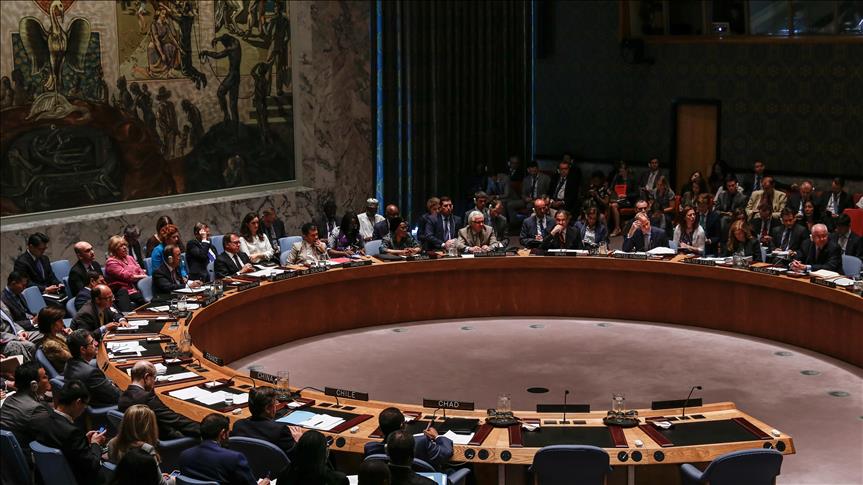
United Nations Security Council members remain divided over whether new penalties should be imposed on Iran following its recent new ballistic missile tests.
Last week Tuesday, media reports said Iran launched several medium- to-short range ballistic missiles, which might have violated a UN resolution.
All members states are now expected to "comply with all provisions of resolution 2231," which was unanimously adopted by the UN Security Council on July 20, 2015, and went into effect in January this year.
The resolution "calls upon Iran not to undertake any activity related to ballistic missiles designed to be capable of delivering nuclear weapons, including launches using such ballistic missile technology".
Resolution 2231 also provides for the termination of provisions of previous UN Security Council rulings on the Iranian nuclear issue and establishes specific restrictions that apply to all states without exception, according to UN.
The U.S., Israel and other Western countries have raised concerns about Iran's recent ballistic missile launch.
Last week, the U.S. said the launch may have violated a UN resolution but not a nuclear deal Tehran signed last year with member states the U.S., Russia, China, England, France and Germany.
“We will raise these dangerous launches directly at council consultations,” the U.S. ambassador to the UN, Samantha Power, had said.
France and England argue that Iran's recent ballistic move violates the UN resolution.
Israeli Ambassador to the UN Danny Danon also called on UN Security Council to take action against Iran.
Russia, however, opposes sanctions on Iran over its ballistic missile tests.
Iran was not in violation of a UN resolution that endorsed the nuclear deal reached between Western powers and Tehran, Vitaly Churkin, Russia’s permanent representative at the UN, said.
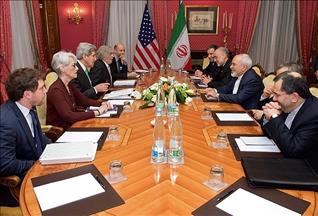
Last year, world powers signed a comprehensive accord called the Joint Comprehensive Plan of Action with Tehran, which placed restrictions on the Islamic republic’s nuclear program in exchange for lifting of some economic sanctions.
It is now a matter of discussion that Western countries may think of bringing bilateral sanctions on Iran if the Security Council does not impose penalties on the country following its recent ballistic missiles launch.